
Relatórios de Atividade IPAM – 2025
IPAM, uma instituição com 30 anos de existência, sempre se renovando, olhando para um futuro sustentável e justo para o Brasil. Cuidando também do clima global, da proteção das florestas, ajudando a desenvolver uma agricultura sustentável e construindo ferramentas...


A gestão ambiental e territorial de Terras Indígenas da Amazônia brasileira: uma questão climática
As Terras Indígenas protegem uma grande proporção da Amazônia brasileira, contribuindo para a redução do desmatamento e manutenção do equilíbrio climático da região. Este papel ecológico é consequência direta da gestão ambiental e territorial que os povos indígenas...
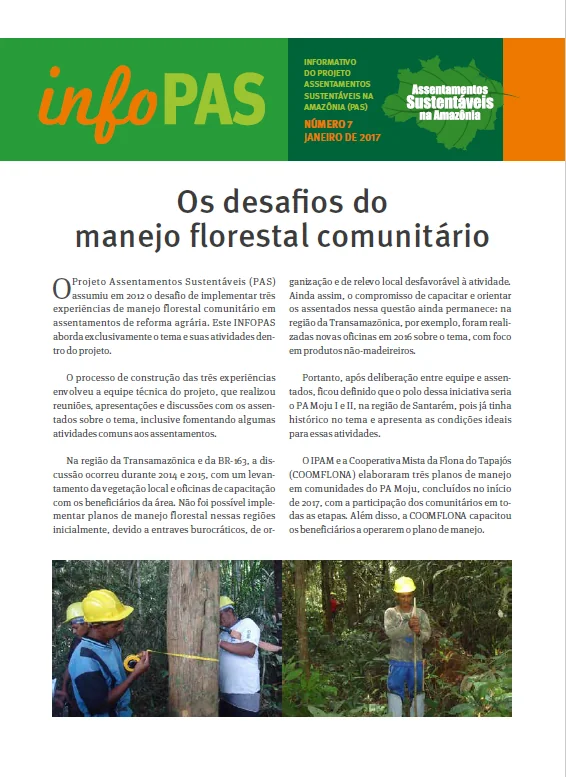
InfoPAS 7: O manejo florestal comunitário
A sétima edição do informativo do Projeto Assentamentos Sustentáveis na Amazônia aborda os desafios do manejo florestal comunitário.
Panorama sobre o desmatamento na Amazônia em 2016
Análise sobre destaques do desmatamento registrado na Amazônia em 2016 pelo sistema Prodes. O índice foi o mais alto desde 2008 atingindo praticamente 8.000 km2 com aumento de 28,7% em relação a 2015.
Brazil’s Forest Code – Assessment 2012-2016
After almost five years, the Forest Code brought about important progress to land use regulation in rural estate properties. But there is an infinity of challenges ahead for Brazil to actually advance in the implementation of the Code.
Brazil's Forest Code – Assessment 2012-2016
After almost five years, the Forest Code brought about important progress to land use regulation in rural estate properties. But there is an infinity of challenges ahead for Brazil to actually advance in the implementation of the Code.
The impacts of recurrent fires on diversity of fruit-feeding butterflies in a south-eastern Amazon forest
In the south-eastern Amazon, positive feedbacks between land use and severe weather events are increasing the frequency and intensity of fires, threatening local biodiversity. We sampled fruit-feeding butterflies in experimental plots in a south-eastern Amazon...