
China-Brazil trade relations: towards a new path for sustainable cooperation
China and Brazil have entered a new phase of bilateral cooperation in which trade, food security, climate resilience, and environmental sustainability are increasingly interconnected. Brazil has consolidated its position as China’s leading agricultural supplier,...

Amazônia em Pauta 2: “PRONAF” in the Amazon, what are the challenges?
Schons, S.Z.; Azevedo, A; Alencar, A. "PRONAF” in the Amazon, what are the challenges?. Amazônia em Pauta. Brasília: IPAM, outubro 2013.
Mato Grosso no caminho do desenvolvimento de baixas emissões: custos e benefícios da implementação do sistema estadual de REDD+
O estudo tem como objetivo identificar, caracterizar e avaliar custos e benefícios advindos da implementação do Sistema de REDD+ no Estado do Mato Grosso.
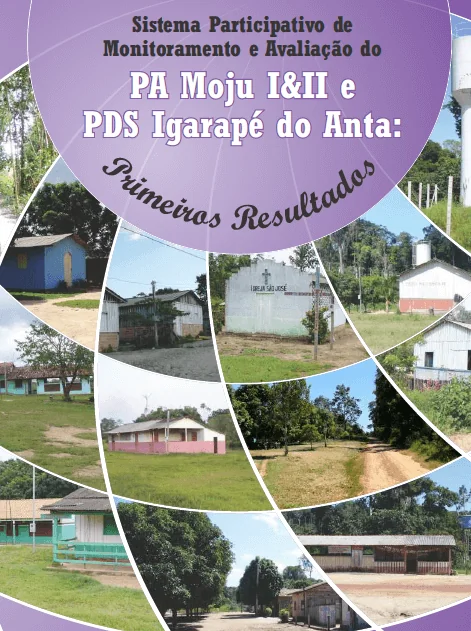
Sistema Participativo de Monitoramento e Avaliação do PA Moju I&II e PDS Igarapé do Anta: Primeiros Resultados
A presente cartilha tem a finalidade de apresentar os resultados da primeira rodada de implantação do sistema participativo de monitoramento e avaliação, e que deve servir como “linha de base” ou ponto de referência para a análise de informações dentro do sistema daqui para frente.
Sistema Participativo de Monitoramento e Avaliação do PA Moju I&II e PDS Igarapé do Anta: Primeiros Resultados
A presente cartilha tem a finalidade de apresentar os resultados da primeira rodada de implantação do sistema participativo de monitoramento e avaliação, e que deve servir como “linha de base” ou ponto de referência para a análise de informações dentro do sistema daqui para frente.
Confronting model predictions of carbon fluxes with measurements of Amazon forests subjected to experimental drought.
Considerable uncertainty surrounds the fate of Amazon rainforests in response to climate change. Here, carbon (C) flux predictions of five terrestrial biosphere models (Community Land Model version 3.5 (CLM3.5), Ecosystem Demography model version 2.1 (ED2),...

O estado atual das mudanças climáticas no Brasil com ênfase na Amazônia
Apresentação feita no evento " Caminhos para uma Agricultura Familiar sob Bases Ecológicas: Produzindo com Baixa Emissão de Carbono", realizado em Brasília em junho de 2013.