
By Mayara Subtil*
As a child, Breno Amajunepá, 24, grew up hearing from his Balatiponé-Umutina people that his generation might be the last to see the forest standing, the rivers preserved, and the ways of life that sustain his people’s relationship with the land. At the time, those words seemed like nothing more than teachings passed down by the elders of the Umutina Indigenous Territory in Mato Grosso. Over the years, however, the young indigenous man from the Balatiponé-Umutina people began to realize that the warnings were linked to changes that had already transformed the landscape around him.
A resident of the Umutina Territory in Mato Grosso, Breno saw droughts become more frequent, rivers lose their flow, and traditional practices cease to be carried out in the same way as before. When he left the community to study International Relations at UnB (University of Brasília), he found new tools to understand what the elders had been observing for a long time. It was also during this period that he began working on initiatives related to socio-environmental issues and, later, joined Youth for Climate, an initiative that supports Indigenous, Quilombola, and extractivist youth in the Legal Amazon in developing strategies for adapting to climate change in their communities.
“Our elders already knew about these consequences. The difference is that they didn’t use the technical terms we use today. Our education helped us translate this knowledge into the language of conferences and decision-making forums,” summarized the young Indigenous man.
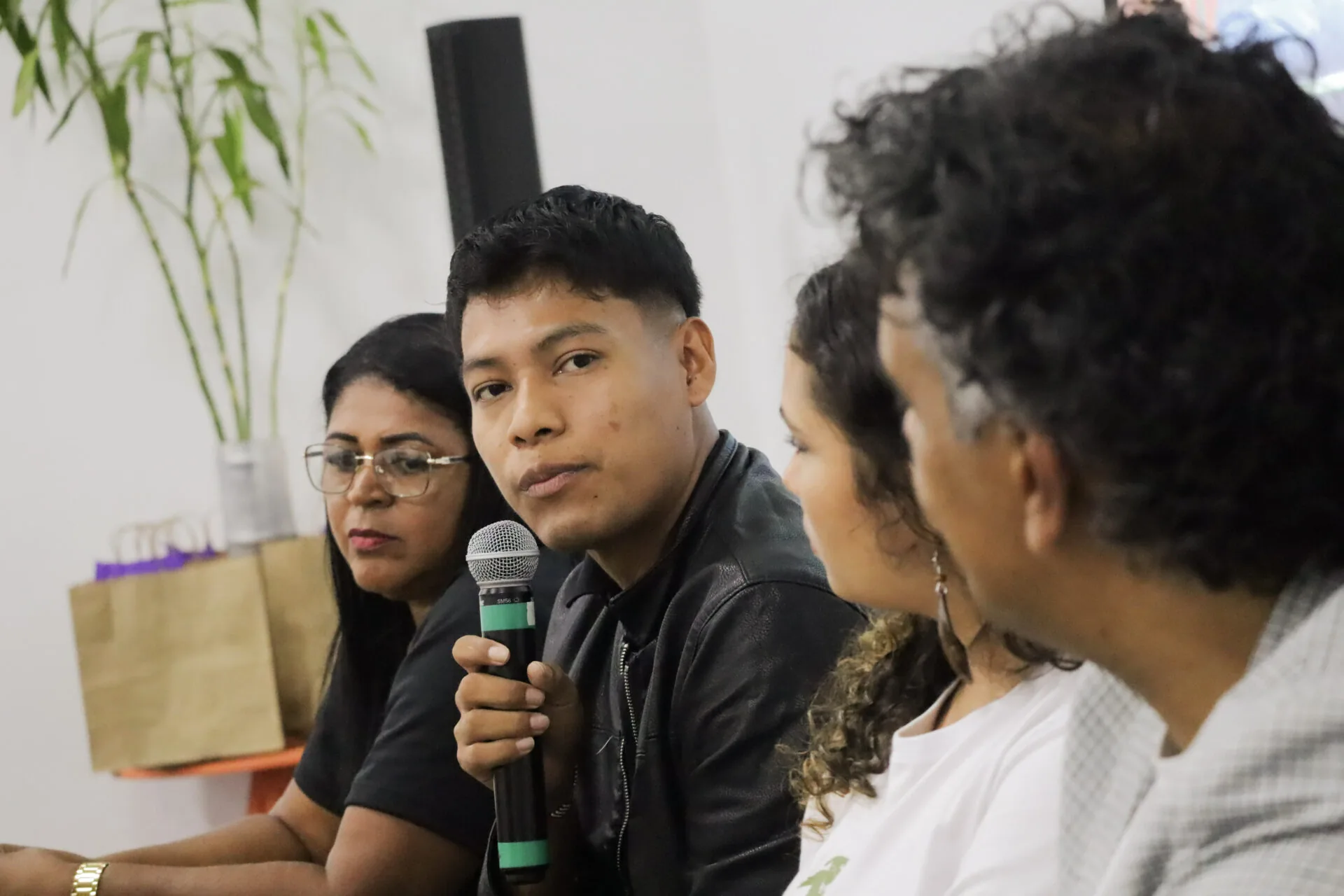
Breno Amajunepá during the publication launch event. Photo: Mayara Subtil/IPAM
Breno’s reflection encapsulates one of the main conclusions of the publication Climate Solutions Through the Eyes of Indigenous Peoples and Traditional Communities: Case Studies from the Youth for Climate Initiative, launched by IPAM (Amazon Environmental Research Institute) and Cultural Survival, with support from ICS (Climate and Society Institute) and funding from the Environmental Defense Fund.
The document brings together the experiences of 18 Indigenous, Quilombola, and extractivist youth from different regions of the Legal Amazon and shows how the knowledge built within these territories can contribute to addressing the effects of climate change.
“The plans developed by the participants demonstrate that responses to the climate crisis are already being built within these territories. Based on local experience and traditional knowledge, the proposals point to ways to strengthen food security, protect natural resources, and restore degraded areas by expanding communities’ capacity to adapt. Together, these initiatives reinforce the potential of social solutions led by Indigenous peoples, Quilombolas, and traditional communities to address the Amazon’s climate challenges,” emphasized Patrícia Pinho, IPAM’s Deputy Director of Science.
Although indigenous peoples, quilombolas, extractivists, and other traditional communities are among the groups most affected by the impacts of the climate crisis, their knowledge is still rarely incorporated into public policies and decision-making processes. The publication highlights precisely that these populations have accumulated generations of direct observation regarding the functioning of ecosystems and have been reporting changes for decades that are now confirmed by scientific studies.
In the Amazon, the effects of the climate crisis have manifested through more severe droughts, changes in rainfall patterns, rising temperatures, forest fires, and more frequent and intense extreme events. IPAM studies indicate that the combination of prolonged droughts and the occurrence of fires compromises the forest’s ability to store carbon, reducing its role as a key regulator of the global climate. Furthermore, even in scenarios where deforestation is reduced, extreme droughts have contributed to an increase in the incidence of forest fires, highlighting the growing vulnerability of Amazonian ecosystems to climate change.
Recent research also indicates that recurring fires and extreme droughts compromise essential ecological processes in the forest, reducing its capacity to absorb and store carbon and making the Amazon more susceptible to the impacts of future climate events.
Youth for Climate
The Youthfor Climateinitiative was launched with the goal of empowering Indigenous youth, Quilombola communities, and extractivists so they could develop climate adaptation strategies in their territories. In total, 18 participants were selected from six states in the Legal Amazon, all with active ties to both their communities and educational institutions.
Over several months, the young people received training on climate change, climate justice, public policy, and project development. At the same time, they were encouraged to conduct community consultations in their territories to understand how residents of different generations perceived environmental impacts.
The methodology was based on a simple principle: no one knows the changes in a territory better than the people who live there. For this reason, participants listened to elders, farmers, fishermen, community leaders, health professionals, educators, women, men, and children from their own territories.
In total, 181 people participated in the community discussion circles. Despite the cultural and geographic diversity of the territories, the accounts presented similar assessments. Among the main impacts identified were prolonged droughts, irregular rainfall, rising temperatures, and more frequent occurrences of extreme weather events.
Participants also reported losses that go beyond economic impacts. In many territories, changes in nature’s cycles have made it difficult to pass down traditional knowledge used to guide activities such as planting, harvesting, fishing, and natural resource management. Changes in animal behavior, the flowering of certain species, and river cycles affect the reference points that have historically organized community life.
From Assessments to Adaptation Plans
The community consultations served as the basis for the development of 18 climate adaptation plans created by the young participants in the initiative. The proposals were developed collectively and later presented to representatives of federal government ministries and potential funders.
The plans were based on the challenges identified in each territory and sought to develop solutions adapted to local realities. Among the proposals are reforestation efforts using native species, restoration of degraded areas, strengthening of agroecological production, preservation of traditional seeds, protection of springs, and the creation of community gardens focused on food security. In some communities, the projects also prioritize the promotion of traditional knowledge and the revival of management practices that help increase the territories’ resilience in the face of extreme weather events.
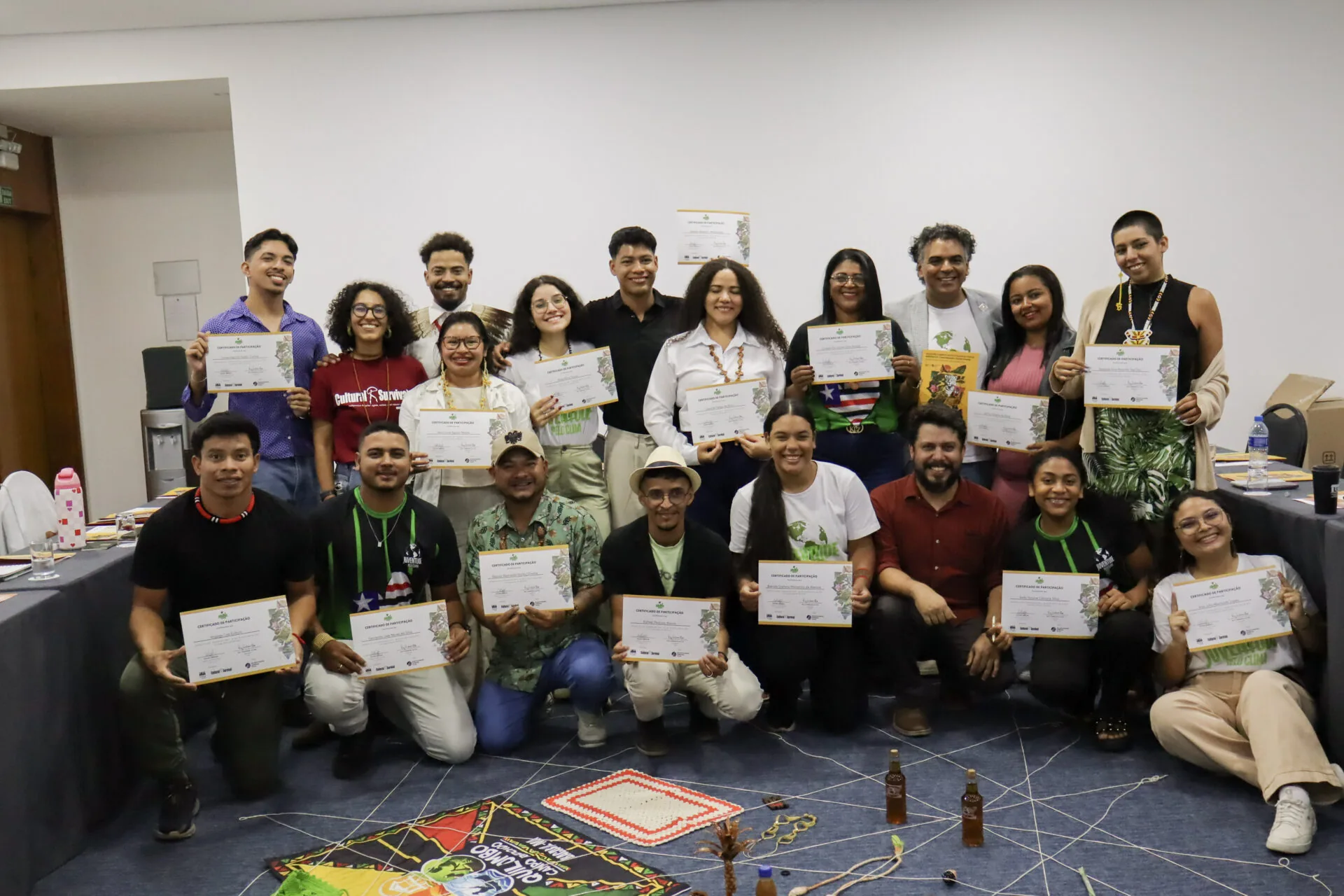
Youth from the Youth for Climate initiative. Photo: Mayara Subtil/IPAM
More than just technical solutions, the plans represent community mobilization processes built on the direct participation of residents. Instead of importing external models, the young people sought to develop responses based on the experiences, needs, and knowledge already present in their territories.
The initiative also strengthened the participants’ political engagement. Part of the group had the opportunity to present their projects at national and international climate forums, including COP30 in Belém. The experience reinforced the perception that Amazonian territories should not be viewed merely as areas vulnerable to environmental impacts, but also as spaces for knowledge production and solution-building.
Despite the progress, the young people point to challenges in transforming the projects into permanent actions. Among them are a lack of financial resources, the need for ongoing technical support, and the expansion of funding mechanisms aimed at community initiatives.
For Breno, the leadership of indigenous youth will be essential to addressing these challenges. “As young people, we often hear that we are the future. But we are also the present. And to secure our future, we need to be active now,” he concluded.
*IPAM Communications Analyst. mayara.barbosa@ipam.org.br
**Cover photo: Mayara Subtil/IPAM