Suellen Nunes*
The exchange of knowledge between family farmers, technicians and researchers marked the “Agroforestry Technical Conference: Amazonian connections Transamazônica/Tomé-Açu”, held between April 20 and 24 in Tomé-Açu, Pará.
Promoted by IPAM (Instituto de Pesquisa Ambiental da Amazônia), in partnership with GIZ (German-Brazilian Cooperation for Sustainable Development), the initiative is part of the project “Forest Restoration in the Amazon: recovery of altered areas in the state of Pará, within the scope of the Regularize Rural Project.”
Aimed at strengthening production in SAFs (Agroforestry Systems), the day focused on exchanging experiences to expand the adoption of sustainable practices in the Amazon, promoting coordination between different territories and profiles of producers.
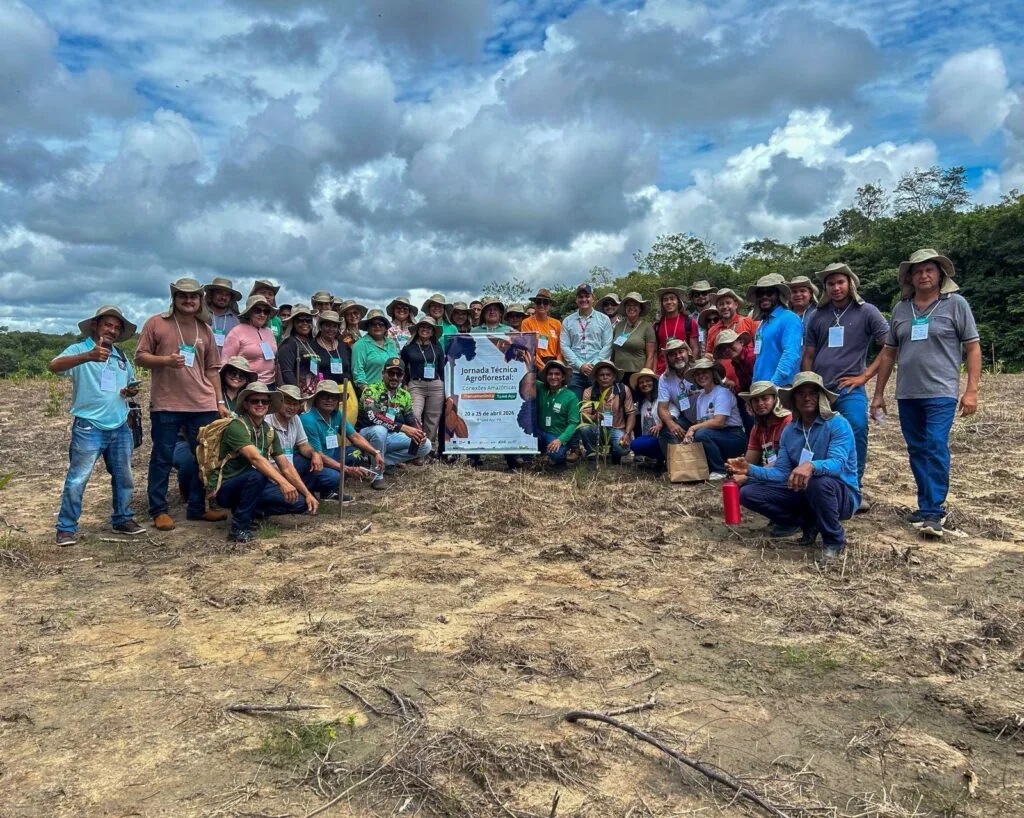
A reference in agroforestry in the country, the municipality of Tomé-Açu brought together participants from the Transamazon and Xingu regions in a program that combined technical visits, exchanges of experiences and debates on common challenges in agroforestry production.
Producers share techniques and results
The meeting encouraged the strengthening of local networks and the discussion of topics such as management, productivity, pests, diseases and access to differentiated markets, valuing the role of farmers, young people and women in building more resilient production systems.
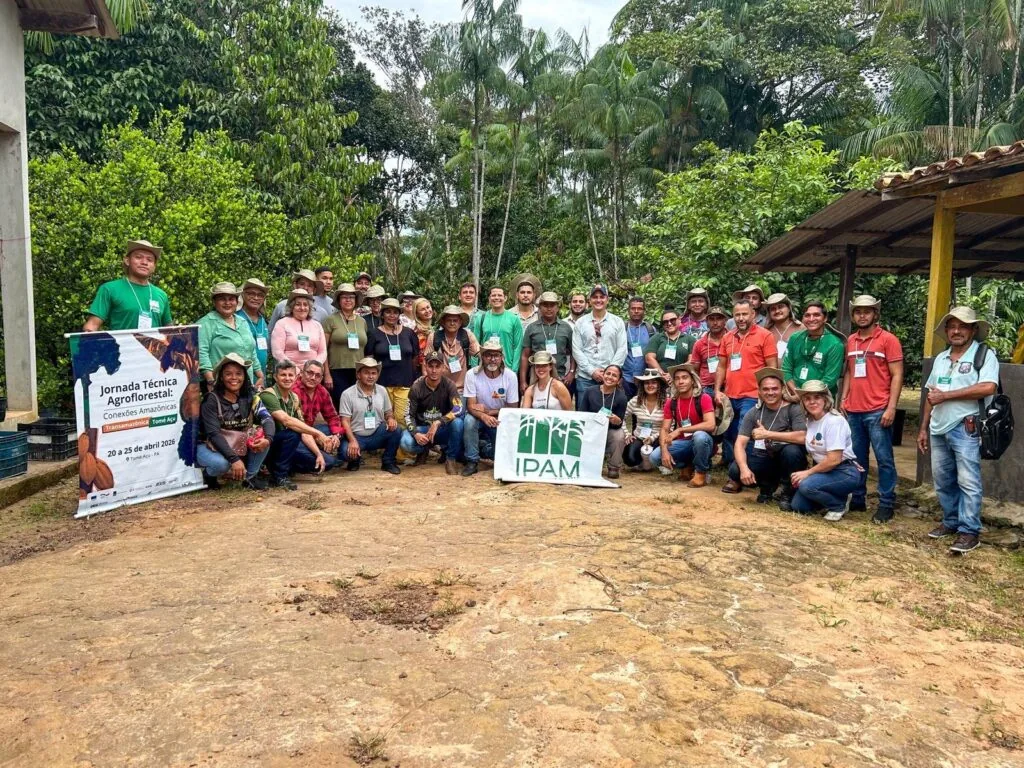
For Edivan Carvalho, IPAM’s state coordinator in Pará, this is not a time for teaching, but for exchanging knowledge. “The proposal is to recognize the knowledge that each farmer brings from their reality. We want to create a space for dialog and collective construction, where it’s possible to share experiences, answer questions and learn about different agroforestry system strategies, bringing ideas that can be applied in the territories,” he explains.
The initiative is a continuation of efforts to strengthen the cocoa production chain in the Amazon through SAFs, building on lessons learned in previous initiatives.
During the program, participants learned about different models of agroforestry systems implemented in the field, observing management strategies, crop diversification and production organization. The visits highlighted the feasibility of combining SAFs with agricultural production, contributing to the recovery of degraded areas and generating income.
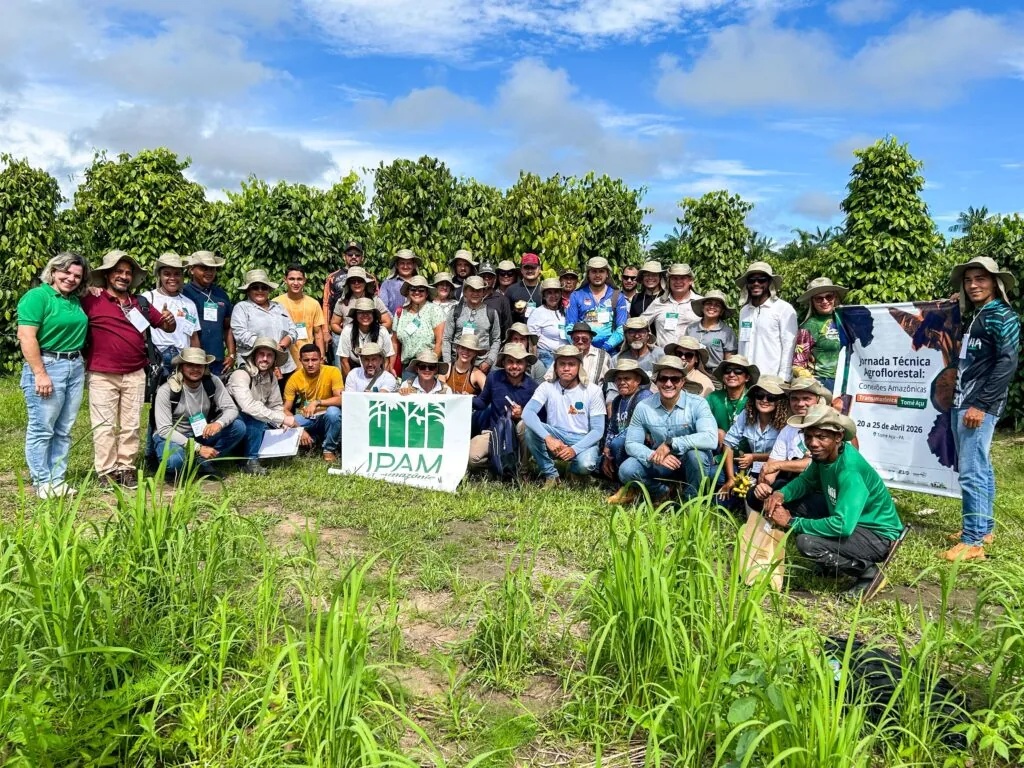
“This exchange shows how many different types of management we have in the same state. Even though we all work in agriculture, these experiences show that we should always be innovating in the field,” says Antônio Lima, a family farmer in Transamazônica.
The visits were made to four production areas with different characteristics, highlighting the diversity of agroforestry, from systems in their initial stages to more consolidated models, with different levels of management and productive organization.
The tour also included a large-scale system, structured as an enterprise, integrating production, processing and access to markets. The contrast demonstrates how SAFs can adapt to different realities and levels of investment.
SAFs advance based on local cooperation
The event aims to broaden production prospects in the region, as Rogério Brito, GIZ’s technical advisor, points out. “The proposal is to bring Transamazonian technicians and producers closer to the experiences developed in Tomé-Açu, recognized as the cradle of agroforestry systems in Pará. We still have a scenario marked by cocoa monoculture, and this exchange opens up space to diversify production based on biodiversity, strengthening the income and sustainability of the properties,” he explains.
For Elder Silva, a teacher and representative of the Placas Rural Family House (PA), the exchange is an opportunity for transformation. “This experience represents a production alternative for our municipality and contributes to the recovery of areas and the exchange of knowledge. Being in Tomé-Açu allows us to get to know these models and take this learning to apply in our reality.”
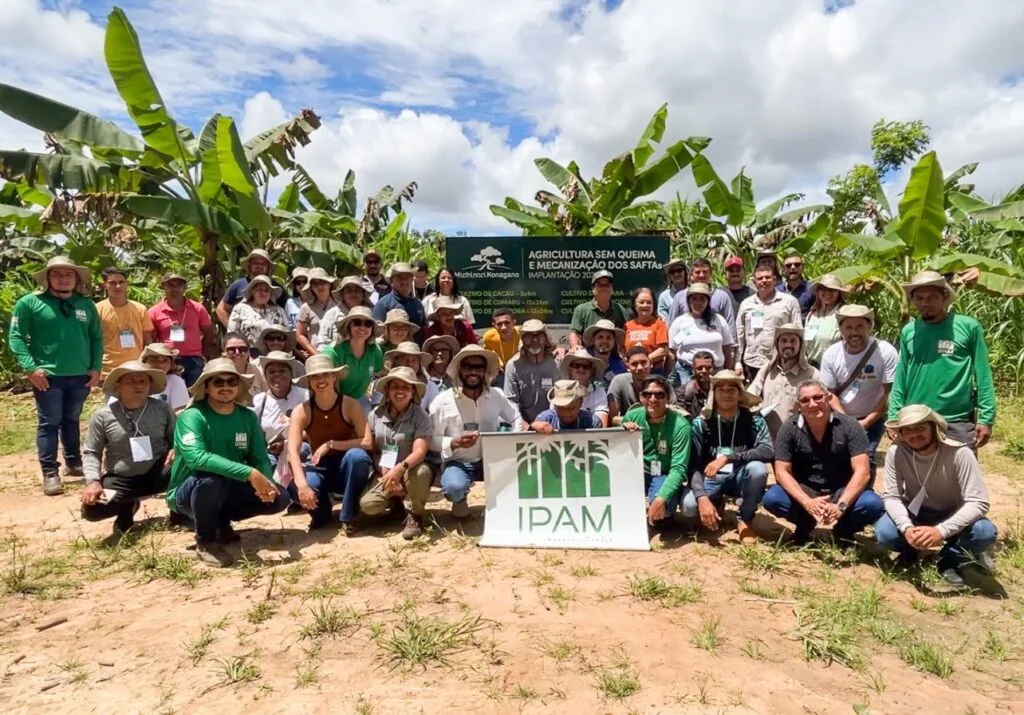
By bringing together different profiles of producers and institutions, the event has consolidated itself as a sustainable development strategy, combining production, environmental conservation and valuing local knowledge.
“We ended this day with the certainty that the exchange of knowledge, combined with practical experiences and technical knowledge, strengthens agroforestry systems as a sustainable development strategy in the Amazon. Throughout these days, it was possible to connect different realities and strengthen the integration between production, conservation and income generation,” says Elisângela Trzeciak, IPAM’s coordinator in the Transamazon region.
The role of cooperatives
The day was attended by six Amazonian cooperatives which were able to learn about the experience of CAMTA (Mixed Agricultural Cooperation of Tomé-Açu), a reference in the organization of the agroforestry production chain, combining sustainable production, adding value and access to national and international markets.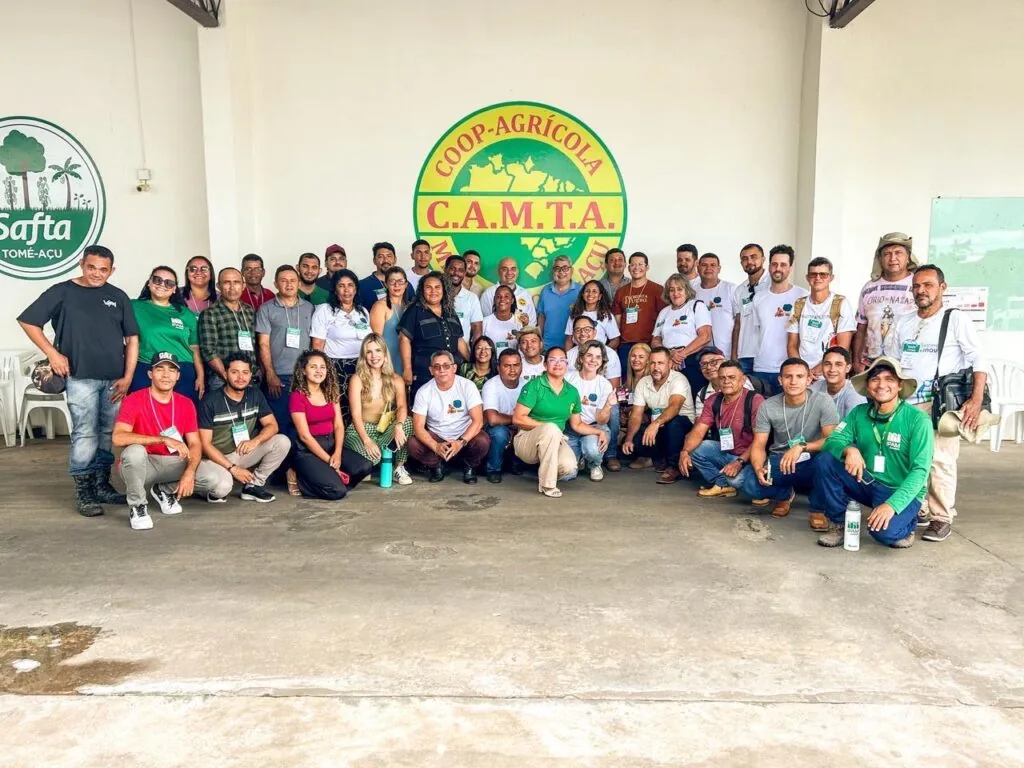
“The cooperative currently has 173 active members and around 1,800 registered producers, directly benefiting at least 10,000 people. With almost 90 years of history, CAMTA stands out for exporting around 5,000 tons of fruit pulp a year,” says Edinaldo Santos, the cooperative’s agricultural assistance director.
The Agroforestry Journey is part of the “Regularizes Rural Project”, coordinated by the SFB (Brazilian Forestry Service) and IICA Brazil (Inter-American Institute for Cooperation on Agriculture), with financial support from KfW (German Development Bank). The initiative supports the states of Pará, Mato Grosso and Rondônia in implementing environmental regularization and monitoring native vegetation. In Pará, the actions are promoted by IPAM, in partnership with Semas.
IPAM communications analyst*.