Suellen Nunes*
On May 20 and 21, extractive producers from the Cajari Extractive Reserve in Amapá took part in a workshop on sustainable açaí production and management practices. The training was promoted by IPAM (Amazon Environmental Research Institute), in partnership with Embrapa (Brazilian Agricultural Research Corporation), with a focus on strengthening local production combined with forest conservation.
During the training, participants were introduced to techniques for managing native açaizal, integrating production, environmental conservation and strengthening family income. The activities included guidance on species identification, management planning and practices applied in the field to improve forest development and increase the productivity of managed systems without compromising biodiversity.
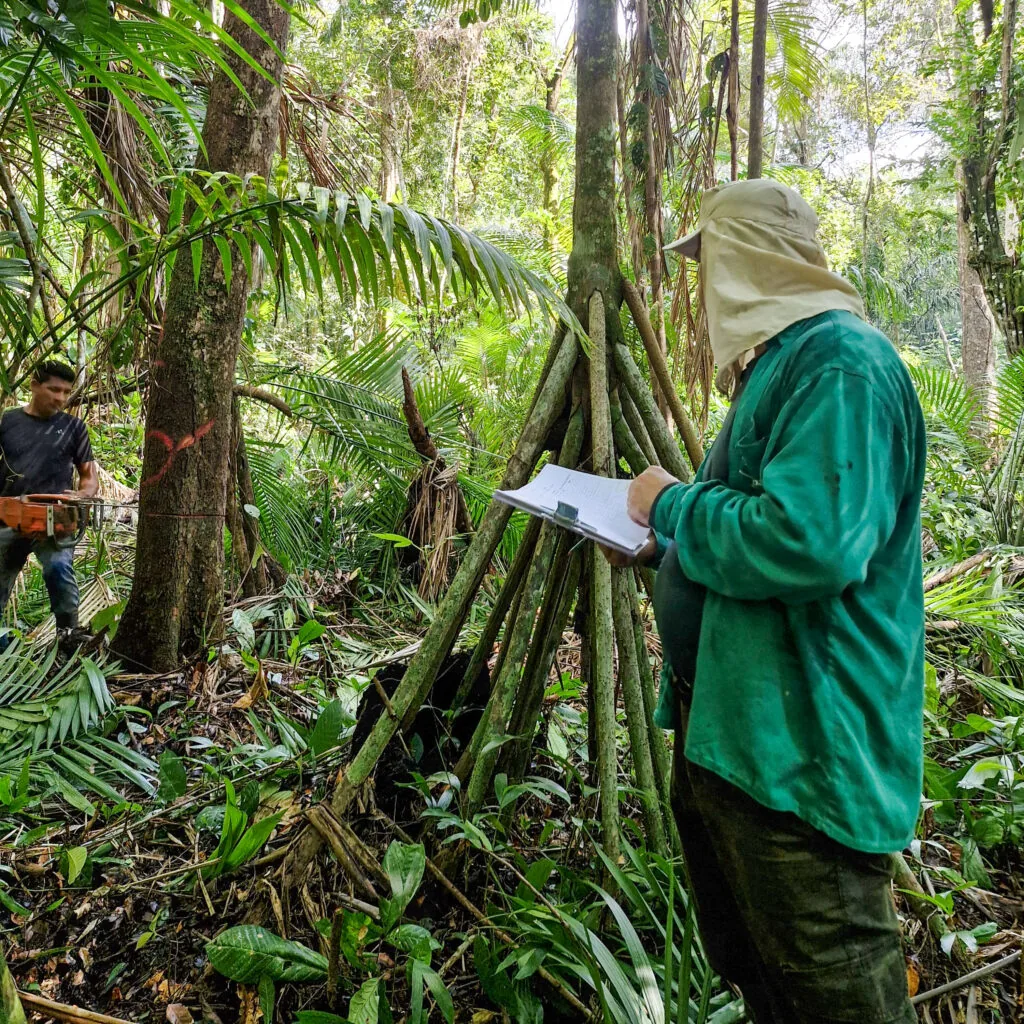
For Anderson Firmino, IPAM’s research analyst in Amapá, the course showed the agro-extractivists how to carry out sustainable açaí management within the forest, reconciling production and environmental conservation. “From the forest inventory, we were able to identify the species present in the area and plan controlled interventions, such as the removal of forest trees and excess açaí to allow more light in, resulting in greater açaí production. At the same time, management keeps other forest species in the area, preserving biodiversity and guaranteeing the standing forest,” he explained.
The training included theoretical and practical activities focused on reduced impact management and sustainable use of the forest, with the implementation of a URT (Technological Reference Unit), installed inside the forest to demonstrate the techniques applied in the field. During the training, the participants carried out a forest inventory, species identification and controlled interventions to improve the development of the açaí trees without compromising the biodiversity of the forest.
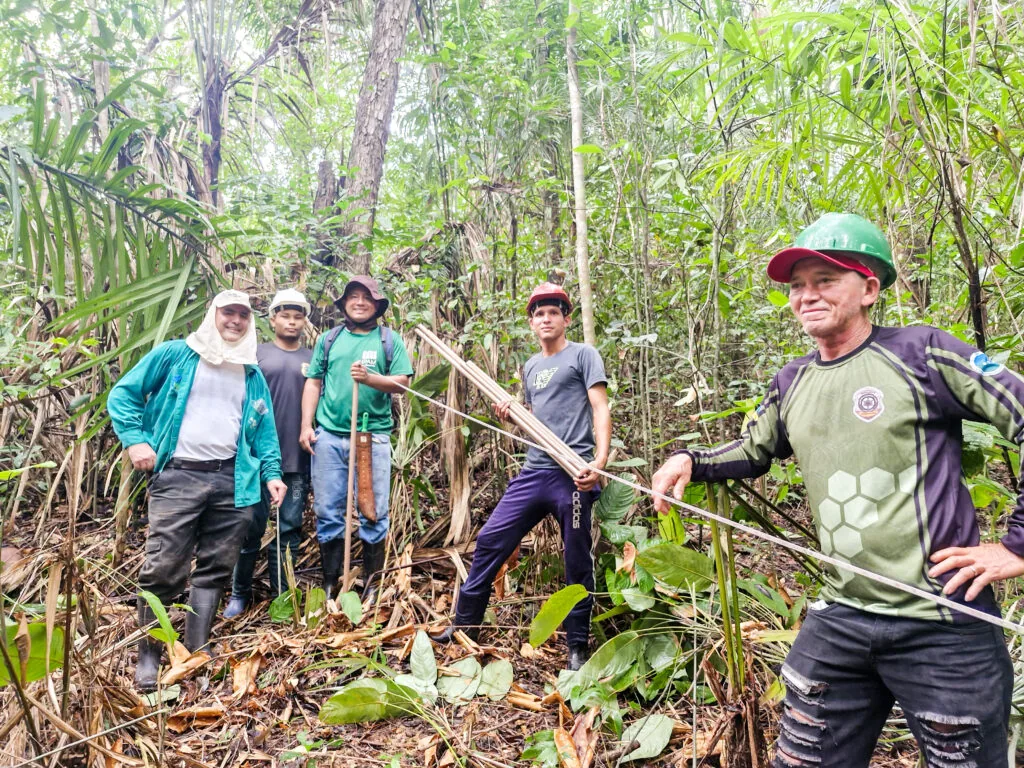
For the participants, the training also represented an opportunity to expand their knowledge of sustainable açaí management and strengthen prospects for generating income in the communities of the Cajari Extractive Reserve. “The course brought learning to our community, both in theory and in practice. For us, this represents hope and an opportunity to prepare work today that can generate results in the future for families in the region,” said Francinei Tavares, an extractivist and member of the Cajari Extractive Reserve’s deliberative council.
The activities also included moments of exchange between the participants about the results observed in the URT, allowing them to evaluate the effects of the practices applied in açaizal management and discuss possibilities for adapting the techniques to other areas of the reserve.
*IPAM Communications Analyst