Suellen Nunes*
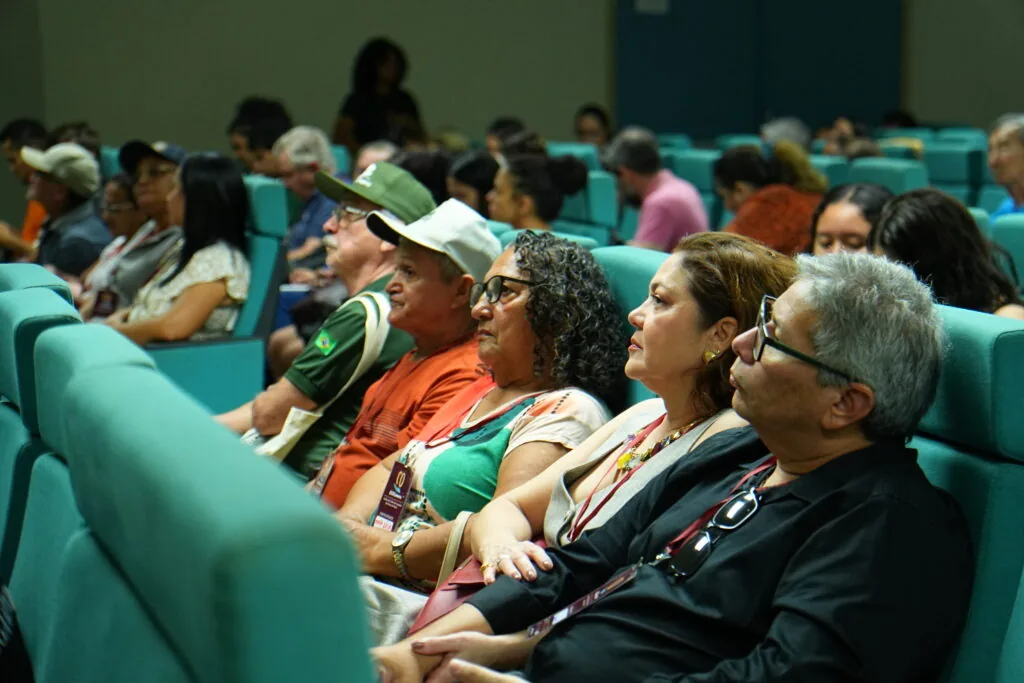
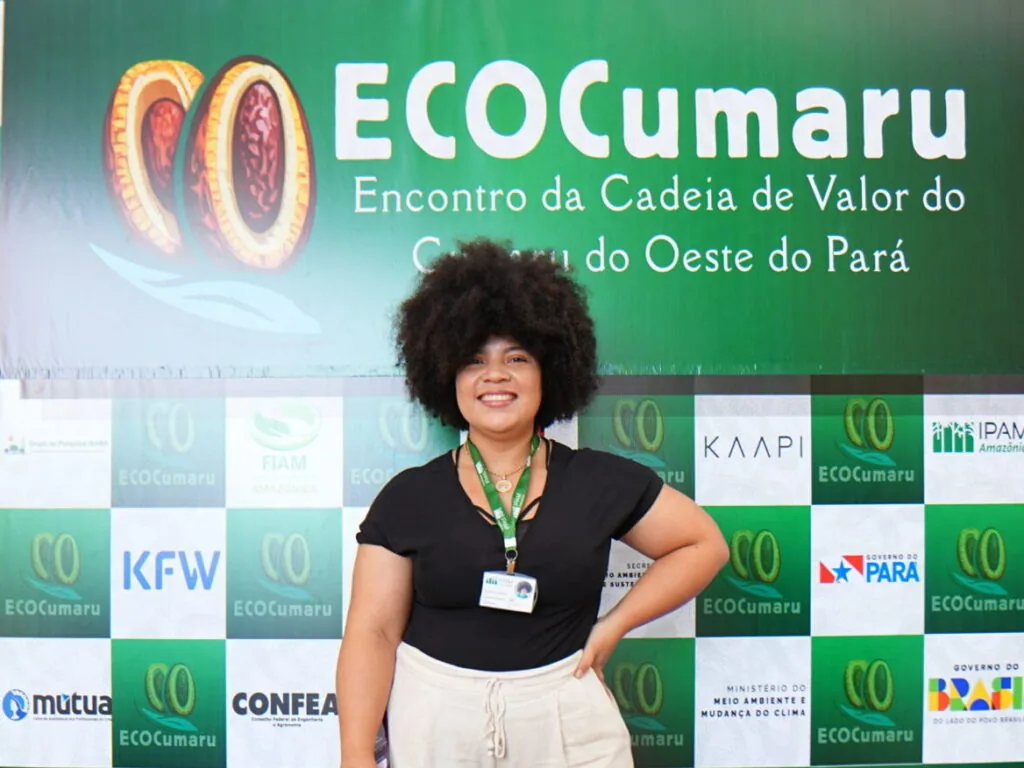
From May 19 to 21, the municipality of Santarém hosted ECOCumaru, the 1st Meeting of the Cumaru Value Chain in Western Pará. The event brought together different players involved in the production and sustainable use of cumaru in the Amazon. The program was organized by the IBEF (Institute of Biodiversity and Forests) of UFOPA (Federal University of Western Pará), in partnership with IPAM (Amazon Environmental Research Institute), and was attended by producers, extractivists, researchers, entrepreneurs, company representatives, civil society organizations and public institutions.
On the first two days, the program included thematic panels, discussion tables and technical and scientific presentations focused on the economic opportunities, the market and the industrial applications of cumaru. It ended with a field activity, complementing the discussions held in the UFOPA auditorium.
Productive restoration in western Pará
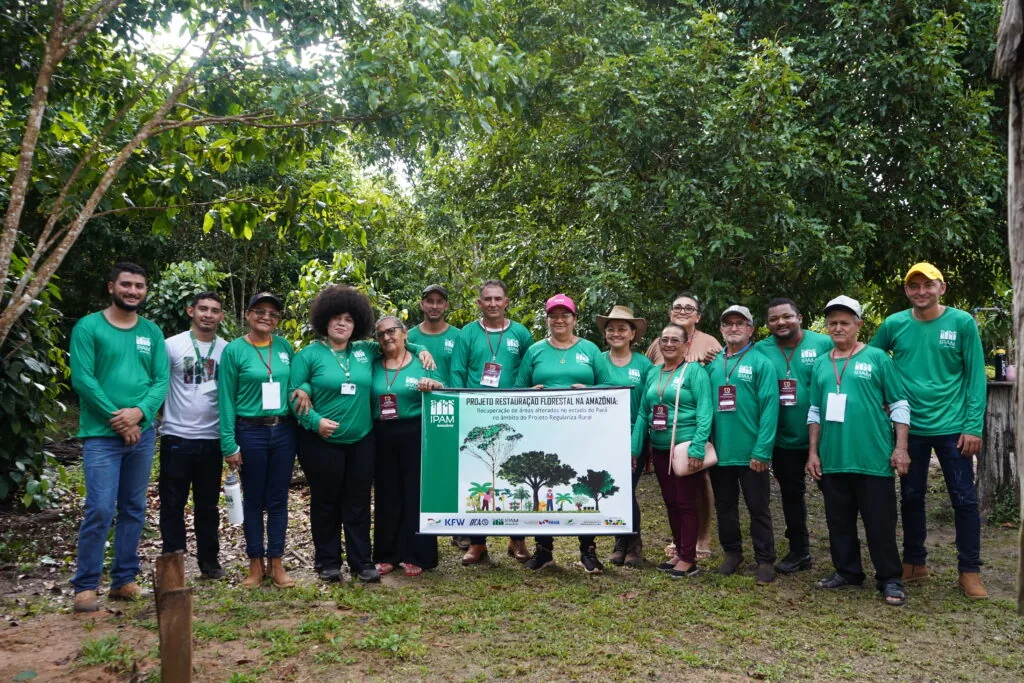
The event was attended by beneficiaries of the Regulariza Rural Project, which is working in various municipalities in the state (such as Santarém, Belterra, Mojuí dos Campos, Rurópolis and Traorão) to contribute to productive forest restoration in degraded areas. Developed by IPAM, the project plans to restore 260 hectares through SAFs (Agroforestry Systems) and forest enrichment models, prioritizing productive species and strategies aligned with environmental recovery and income generation.
“The initiative has already planted around 110 hectares, with approximately 18,000 cumaru trees included in the agroforestry systems. What we have observed is that practically all the families assisted have chosen to include cumaru in their productive arrangements, showing the economic and environmental potential of this species within forest restoration strategies,” said Taiane Libório, IPAM’s research analyst.
For Libório, taking part in an event focused on the cumaru production chain broadens her knowledge of the species’ different uses and market possibilities. “As well as marketing the seed, the meeting presented possibilities linked to the production of bio-jewelry, dyes and other derivatives, highlighting the economic potential of cumaru for different production chains in the Amazon,” she concluded.
Cumaru in numbers in Pará
Cumaru is the seed of a tree native to the Amazon, known as the “Brazilian vanilla”. It has a sweet and woody aroma, associated with notes of vanilla, cinnamon and almonds. A study carried out in partnership with UFPA (Federal University of Pará), UFOPA (Federal University of Western Pará) and Unifesspa (Federal University of Southern and Southeastern Pará) pointed to evidence of under-reporting of cumaru production in Pará.
While official data from the IBGE (Brazilian Institute of Geography and Statistics) recorded production of 148 tons, with turnover of R$13.3 million, the survey focusing on buyers and beneficiaries in the chain identified actual production of 267 tons, equivalent to R$24.4 million in turnover.
The data presented during the 1st ECOCumaru shows the economic progress of the cumaru chain in Pará. Currently, the product ranks 25th in volume among biodiversity products and 16th in commercialized value. The state accounts for around 80% of national production, with the municipalities of Santarém, Oriximiná and Curuá standing out as the main production centers.
The survey also identified a significant increase in the value of the product in recent years. During this period, the price of a kilo of cumaru has risen from around R$50 to as much as R$100, and can reach up to R$170 in some places of sale.
Event strengthens links in the production chain
The aim of the meeting was to strengthen the dialogue between the different segments involved in the cumaru production chain in the west of Pará, promoting the exchange of experiences and expanding the links between players involved in research, management, marketing and valuing the species. Over the course of the program, the initiative brought together around 500 participants.
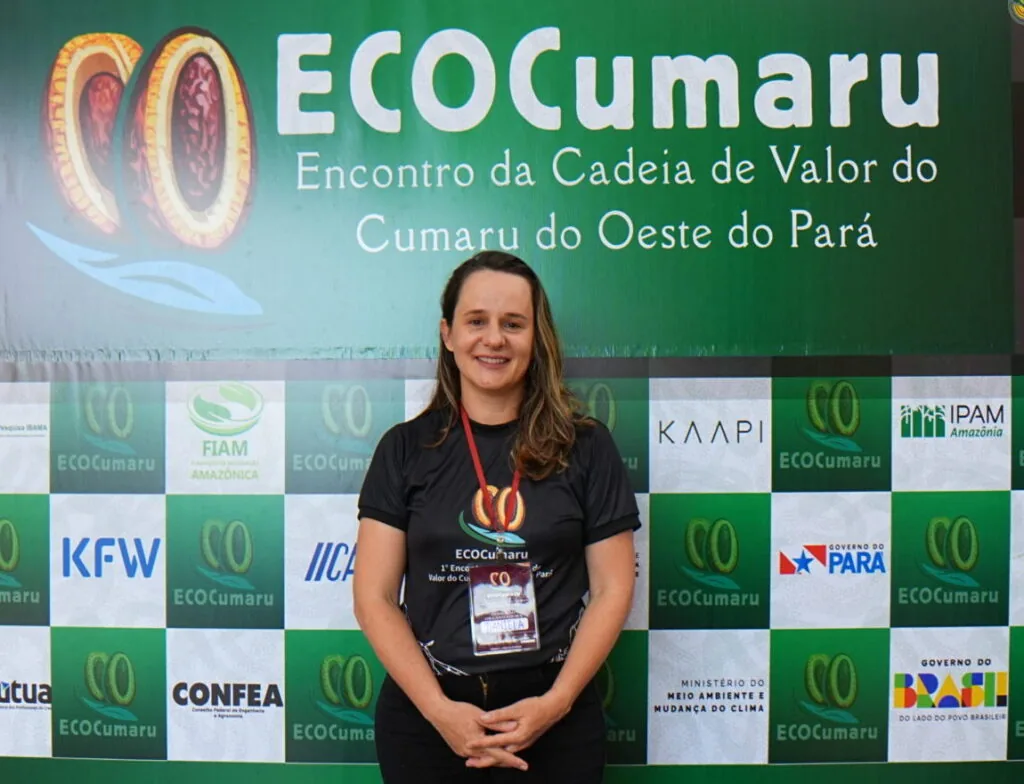
For Professor Daniela Pauletto, one of the coordinators of the meeting, ECOCumaru reinforces the role of western Pará in the seed production chain. “This event was conceived here in Santarém, within the university, precisely because western Pará is a leading player in the production of cumaru. Pará is the largest exporter of the product in Brazil, and a large part of this volume comes from our region. The purpose of the meeting was to bring together the municipalities involved in this chain and create a space for dialog between the different players who are part of this process,” he said.
Maria Zelho da Silva, a resident of the Vista Alegre community in Uruará, says that her family’s production began with cocoa cultivation, an activity that is currently showing good results on the property. “With the arrival of the project, we added new species to the production systems, including cumaru, açaí, taperebá and pequi, expanding the diversity of crops grown by the family.”
According to the producer, the expectation is to increasingly expand production and increase the area cultivated with these species. “This helps to strengthen the family’s income and diversify production on the property,” she said.
IPAM Communication Analyst*