
To contribute to the autonomy of indigenous firefighters and communicators, IPAM (Amazon Environmental Research Institute), in partnership with the Woodwell Climate Research Center, held mini courses in GIS (Geographic Information System) and Communication in the Raposa Serra do Sol indigenous land in Roraima.
From September 8 to 11, 18 representatives of six peoples took part in the training: Macuxi, Wapichana, Waiwai, Taurepang from Roraima; Terena and Kadiwéu, from Mato Grosso do Sul.
Ancestral knowledge and technology
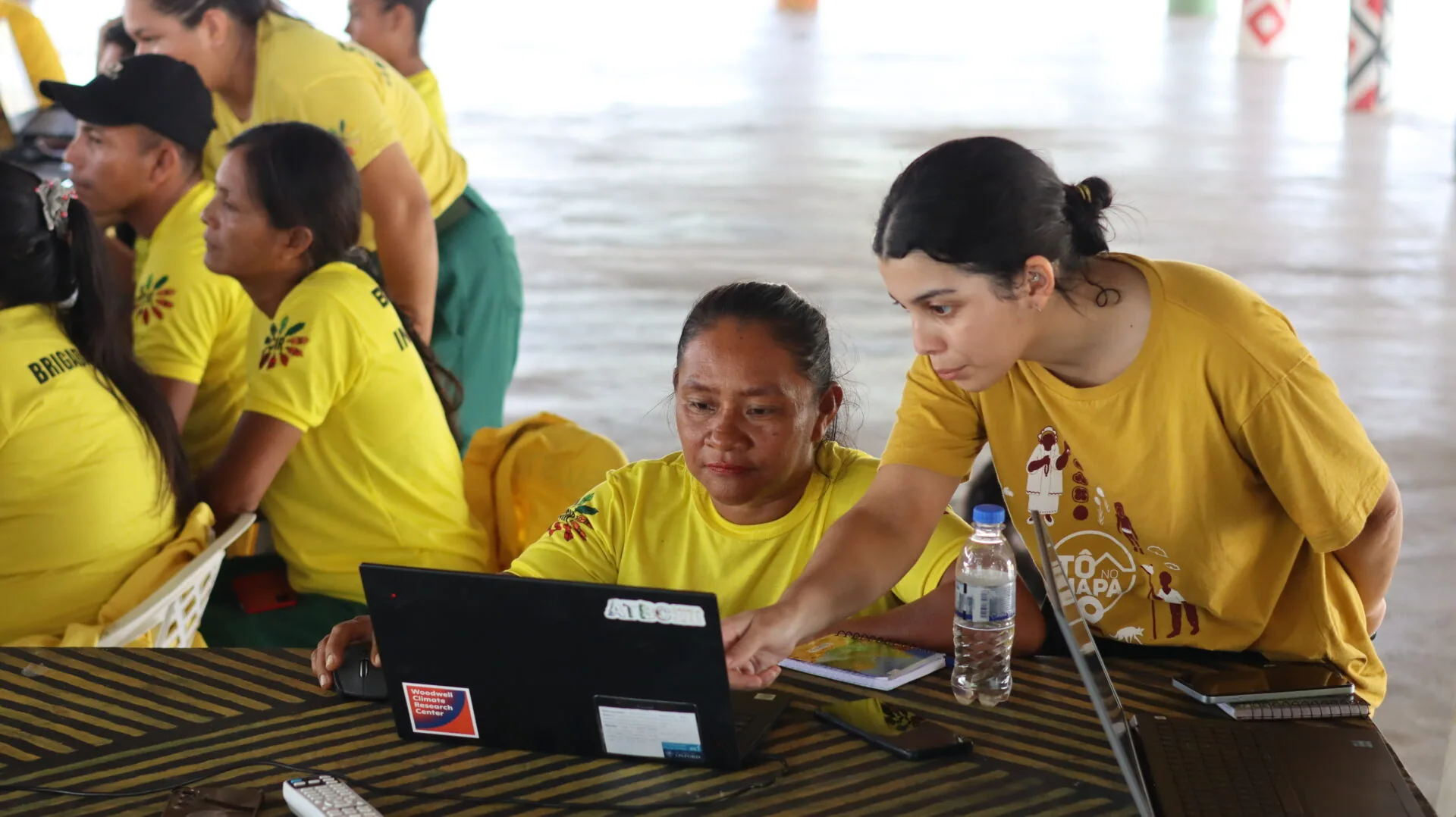
The GIS course combined the traditional knowledge of indigenous firefighters, most of whom are women, with geospatial database technology. The aim is to make it easier to draw up maps for monitoring the territory, contributing to fighting and preventing fires, which the brigades already do.
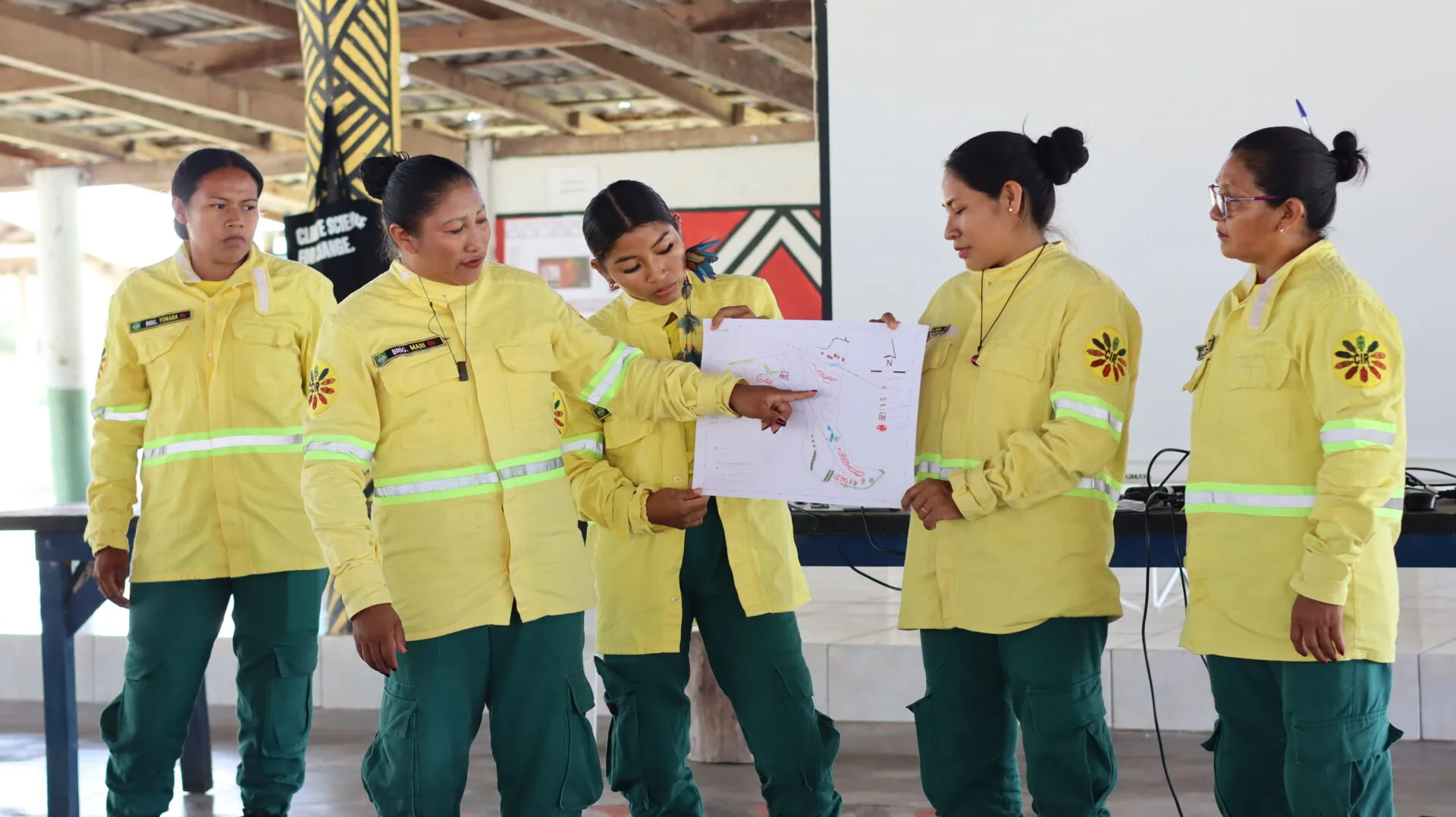
Ana Paula Leví, from the Wapichana people, is the coordinator of the indigenous community brigade in the state of Roraima and attended the course. “It’s been very special for us, indigenous women. We knew our map from hiking, but we’re always keeping up with new technologies. The use of computers and satellites makes it easier for us to move around and shows which areas have been burned,” she said.
“The digital map allows us to explore more of the territory than the physical map, such as zooming in on specific places,” says Luciana Correia da Silva, head of the PrevFogo brigade squad in Mato Grosso do Sul.
Tarsila Andrade, a research analyst at IPAM, was one of the facilitators of the training. “The brigade members have advanced spatial knowledge of their territories, which adds even more to their learning during the course,” she says.
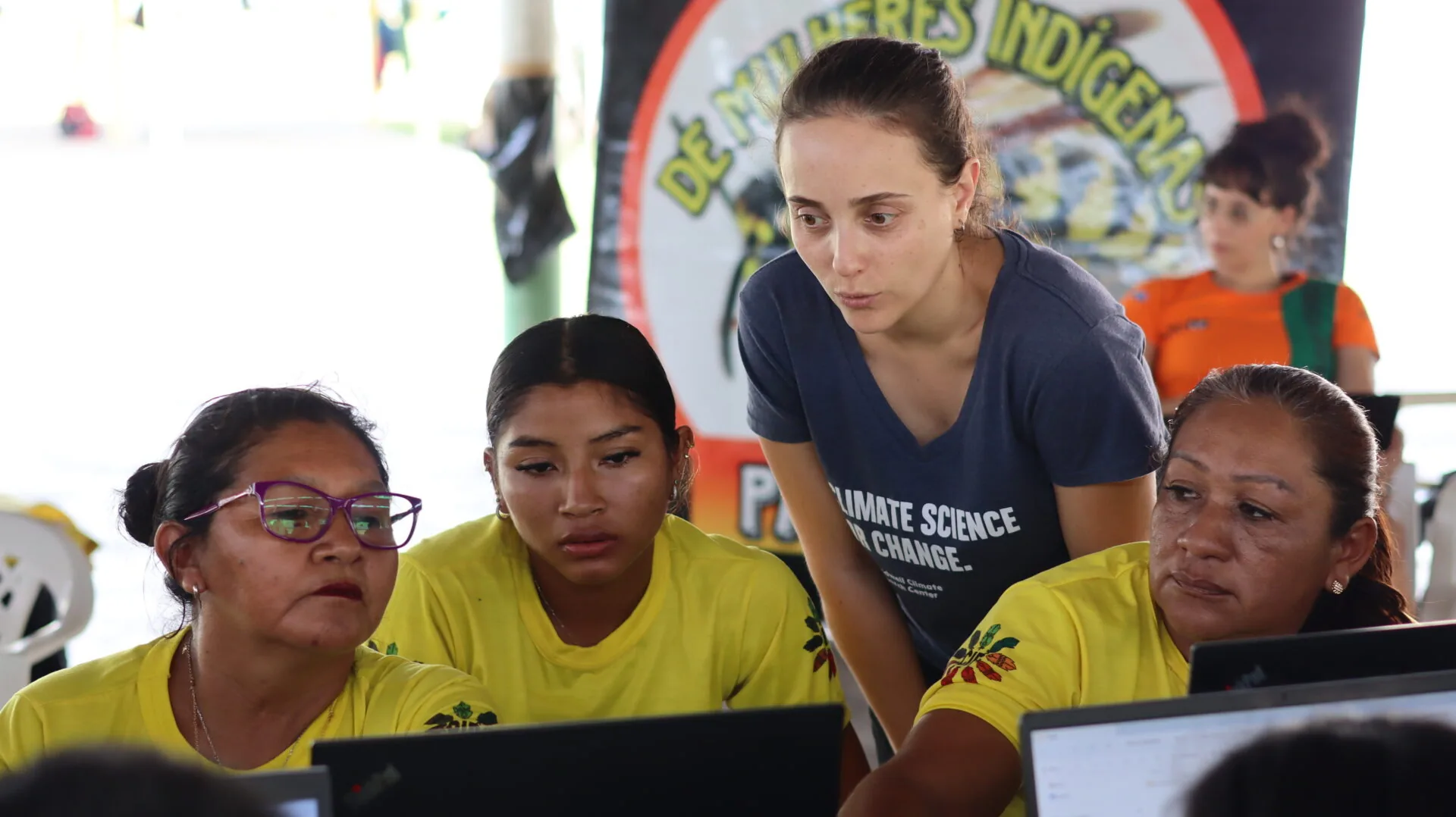
“We combine the knowledge they already have with tools for building maps, from acquiring spatial data to understanding fundamental elements such as the coordinate system, scale, and legend. All so that they can create maps that tell the stories of their territories,” says Manoela Machado, a researcher at the Woodwell Climate Research Center.
Exchanging knowledge
The communication workshop covered topics such as the structure of a news story, granting and conducting interviews, planning content for social networks, and audiovisual techniques; it also presented the Proteja platform, a virtual library with content on protected areas.
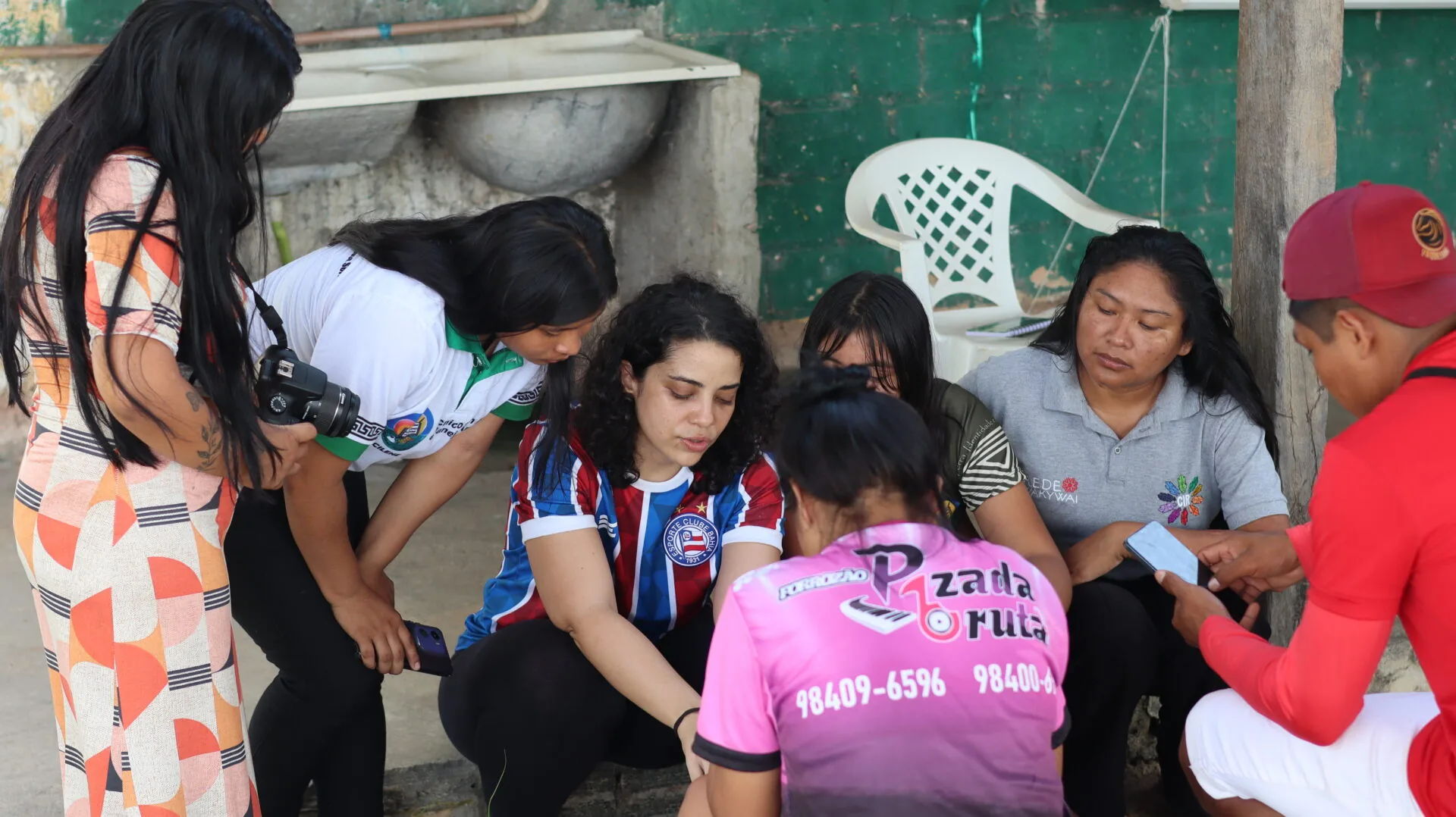
Isabela Tomaz da Silva, from the Wapichana people, is part of the Communications team in the Serra da Lua region and took part in the training. “The communicators are the first to echo the voice of the indigenous peoples of the state of Roraima and the indigenous movement. The course helps us to make complaints and show what’s going on inside our territories,” she explains.
Charles Nogueira, from the Taurepang people, is the communications coordinator for the CIR (Indigenous Council of Roraima) and took part in the training. “It’s nice to see this exchange between different people, from different regions, bringing their own ideas, visions, and dreams. These courses are extremely important for the independence and autonomy of indigenous communities, making them masters of their own voices and echoing their territories,” he says.
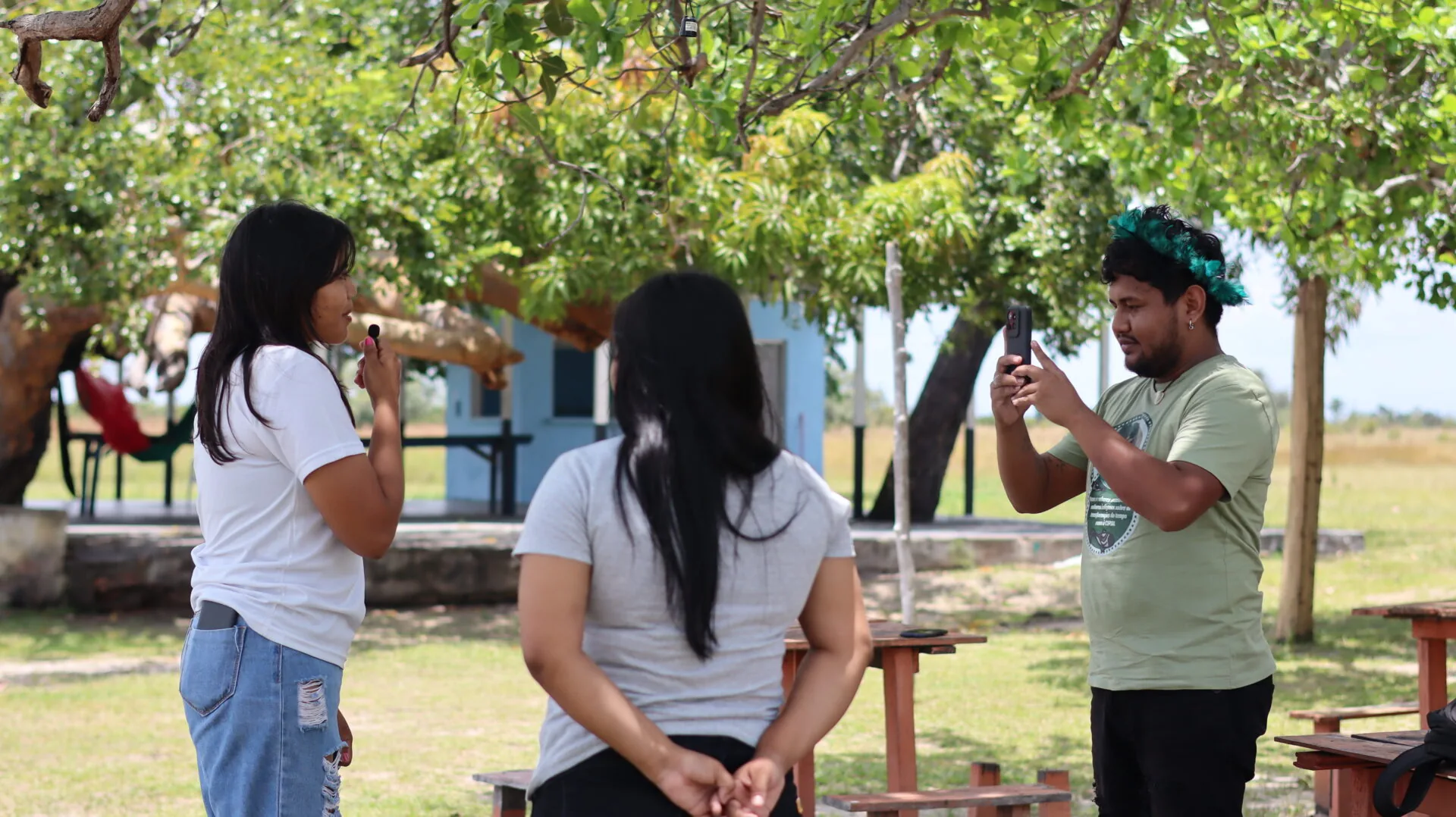
“We shared what we do in IPAM’s communications with the indigenous communicators from the region, but it was also an opportunity to exchange with them, who already work in the area and have a lot of experience and knowledge,” says Sara Leal, IPAM’s communications coordinator and one of the course facilitators.
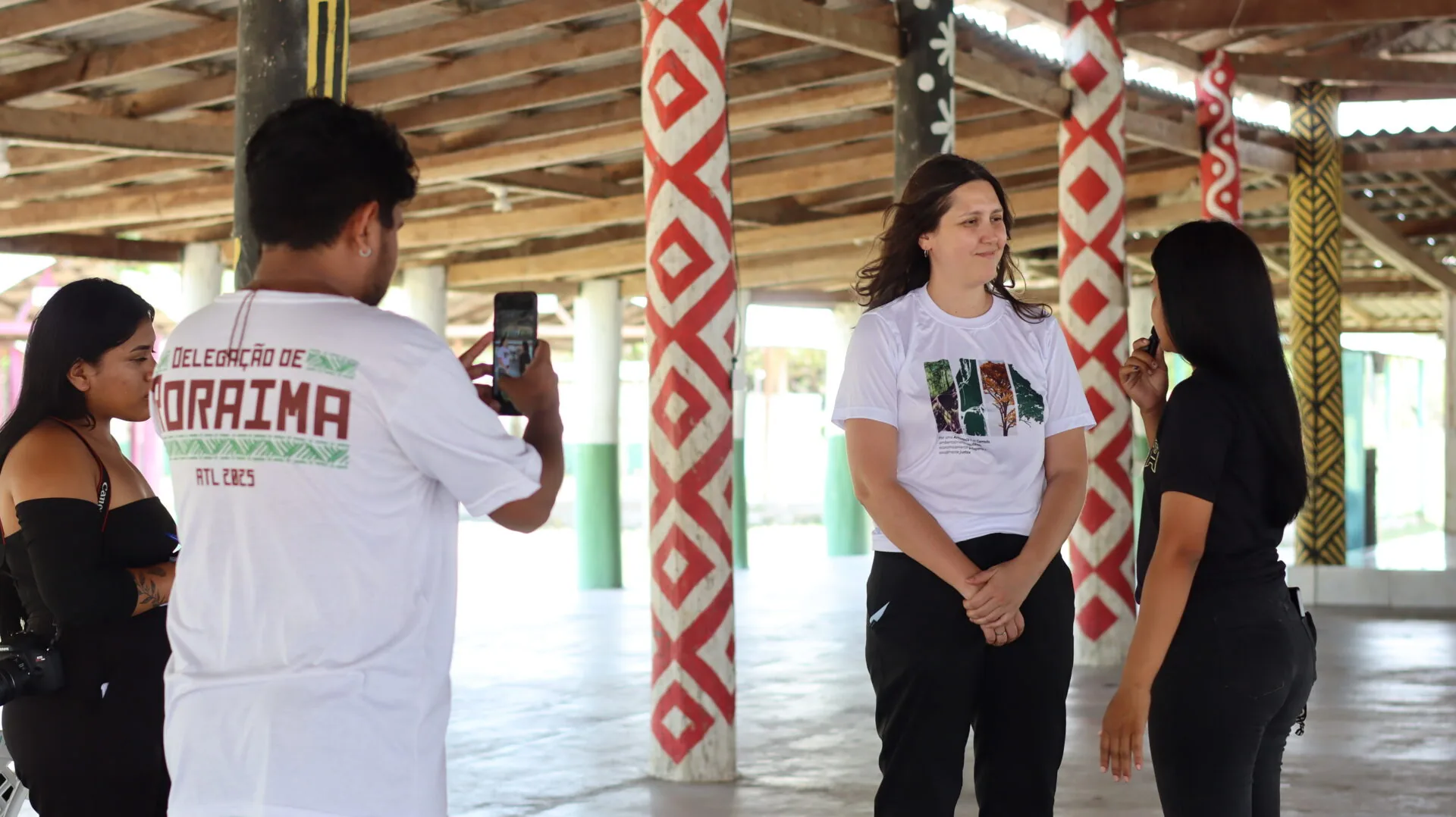
The communication course was supported by the Proteja initiative, through the Proteja Educa Program, which aims to provide training and tools for indigenous peoples and traditional communities to disseminate their knowledge and expose their reality.