
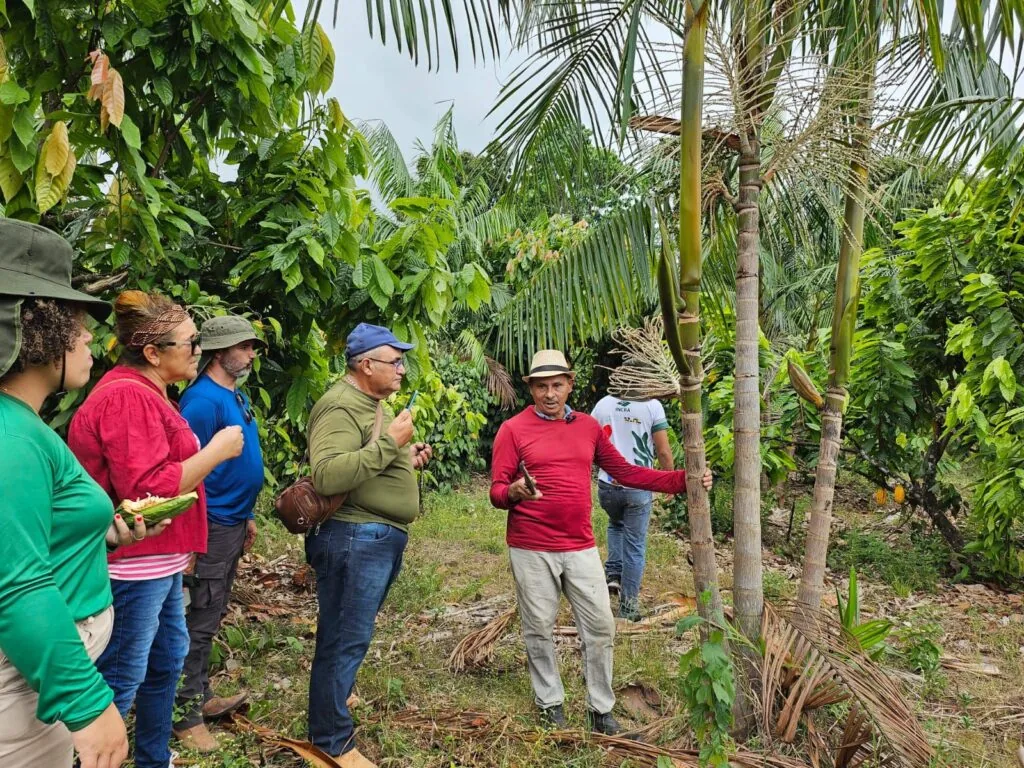
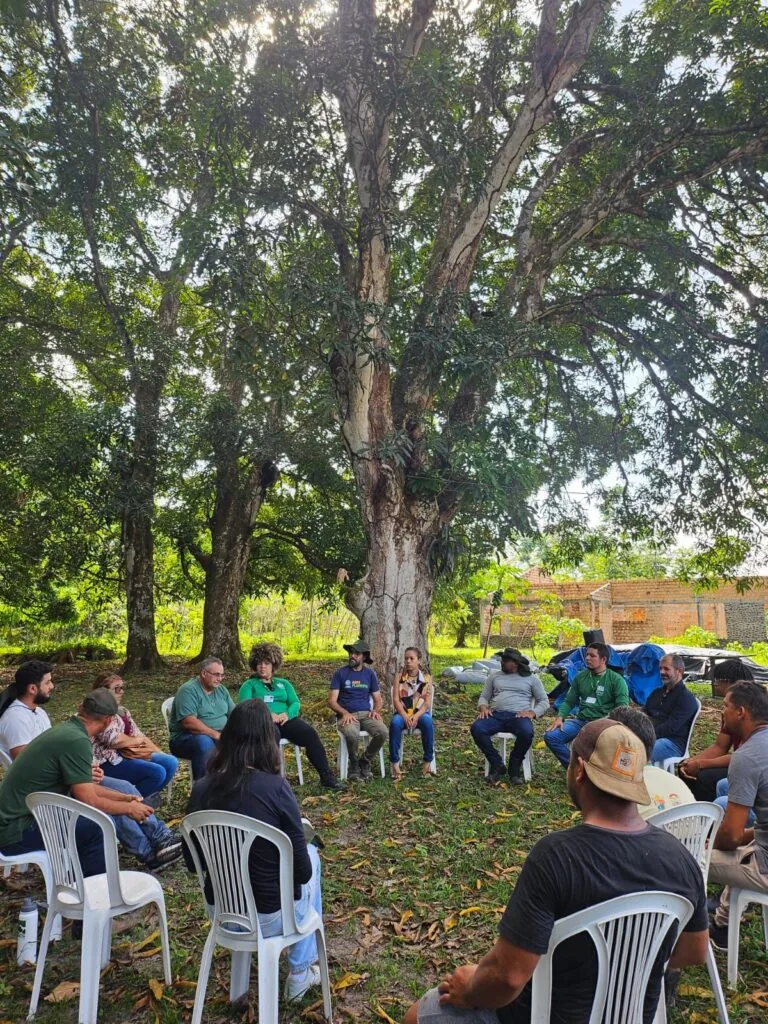
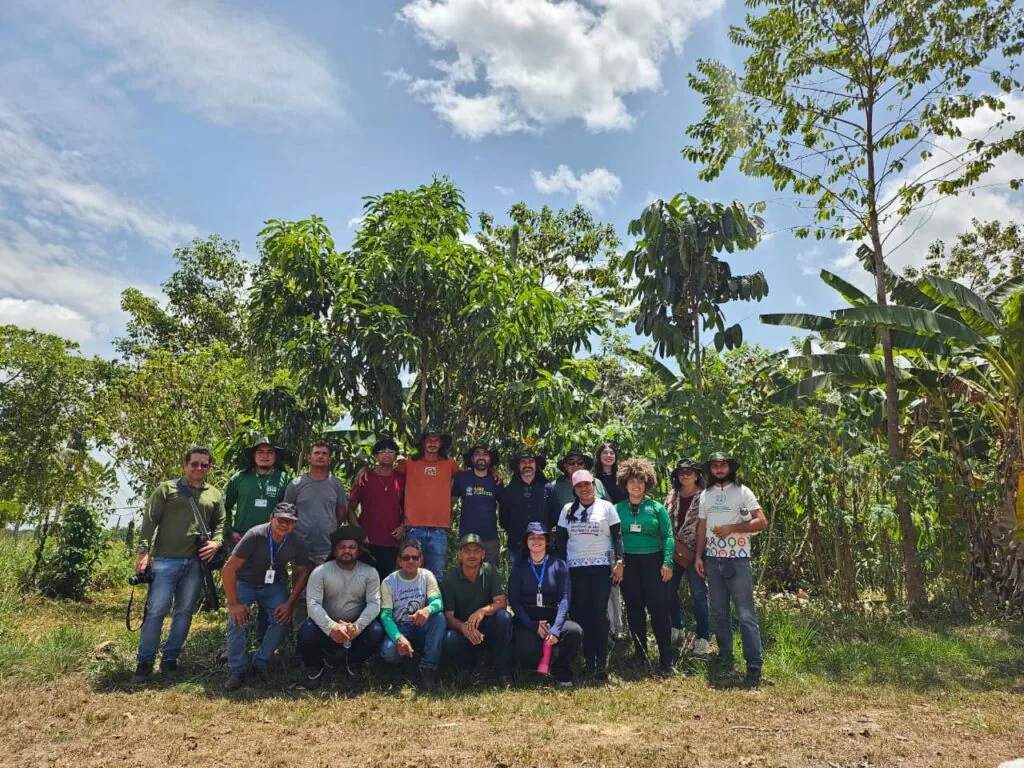
With the goal of promoting the exchange of experiences among farmers, IPAM (Amazon Environmental Research Institute) held an exchange program on August 25–28 in Tomé-Açu and Irituia (PA) focused on the restoration of disturbed areas using agroforestry systems (AFS). Participants visited SAF demonstration sites supported by IPAM in the municipality of Tomé-Açu. The activity allowed participants to learn about techniques, species, and different production arrangements used in agroforestry systems, as well as to observe, in practice, approaches that can be adapted to the conditions of different regions.
The property of Raimundo Nonato Santos, who has been working with forests for over 20 years, was one of the sites visited. “I’m participating in two IPAM projects that have helped me a lot. I needed to reforest two areas, and they helped me with açaí and cacao seedlings. One of the areas, which used to be nothing but pasture, now has 4.8 hectares reforested.”
A Model City for Agroforestry Systems
Tomé-Açu has established itself as one of Brazil’s leading examples of agroforestry systems (SAFs), the result of a journey built over decades by local farmers and institutions. The initiative emerged as an alternative to black pepper monoculture and began combining different agricultural crops and forest species, diversifying production and sources of income.
The initiative has also gained recognition outside the municipality. The Ministry of Agriculture and Livestock presented Tomé-Açu as an example of production that integrates agricultural diversity, standing forests, and income generation, while recent research continues to analyze the municipality’s agroforestry systems as a strategy for productive diversification, family farming, and resilience. Tomé-Açu’s track record shows how agroforestry systems can be adapted to local conditions and pave the way for agriculture that combines production and conservation in the Amazon.
Participation in the 15th Tomé-Açu Agroforestry Systems Seminar
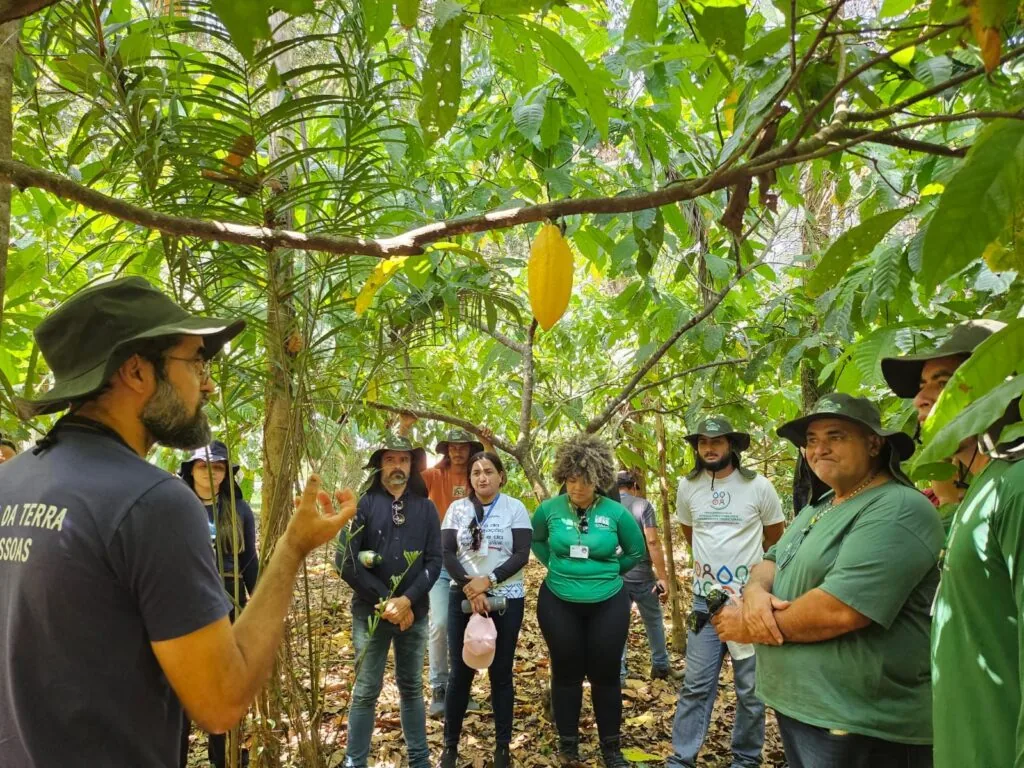
The farmers involved in the exchange also had the opportunity to participate in the “15th Tomé-Açu Agroforestry Systems Seminar.” Held on August 26 and 27, this year’s seminar had the theme “SAFTA: A Legacy That Inspires the World” and was part of a program that also included the First National Symposium on Agroforestry in the Amazon and the Fourth Academic Week of Agricultural Sciences in Tomé-Açu. The program included lectures, scientific papers, experience-sharing sessions, and field activities on various aspects of agroforestry systems, and the event brought together more than 300 participants, including family farmers, researchers, students, companies, and institutions, to discuss sustainable production, family farming, and new strategies for agroforestry systems in the Amazon.
“We presented the results of the restoration projects using agroforestry systems that IPAM has been developing in Pará, in the Tapajós region and in northeastern Pará. It was also an opportunity for farmers benefiting from these projects to learn about new technologies, new production models, and new strategies for promoting and disseminating agroforestry systems,” explained Edivan Carvalho, researcher and IPAM coordinator in Pará.
Topics discussed included sustainable land use, regenerative agriculture, macauba and coffee production, generational succession in cooperatives, environmental regularization, agroforestry systems in family farming, climate resilience, environmental legislation, the nutritional potential of agroforestry systems, and environmental compensation. The program also addressed challenges facing Amazonian agriculture, such as climate change and the need to diversify production systems.
For Antônia dos Santos, from the Jacaré community in the municipality of Mojuí dos Campos, the seminar provided new insights. “I’ll leave here feeling very enriched, having met new people and learned about new technologies and innovations to apply on my land. It’s a different routine, a different experience, and being able to participate so intensely is rewarding.”
The program concluded with a field trip and a visit to IVISAM (Institute for Life in Amazonian Synecology), in the municipality of Irituia, Pará, which allowed participants to learn about regenerative agriculture, agroforestry systems, no-burn farming, and the history of Japanese immigration directly in these areas.
“We presented the work we’ve been doing to implement SAFs, enrich secondary forests, and promote natural regeneration in the northeastern regions of Pará, the Tapajós, and the Transamazônica. Through this initiative, IPAM has been contributing to the restoration of 750 hectares of environmentally degraded land in these three regions. We were able to discuss the difficulties and challenges, but also the opportunities for environmental regularization,” said Itallo Leal, a researcher at IPAM.
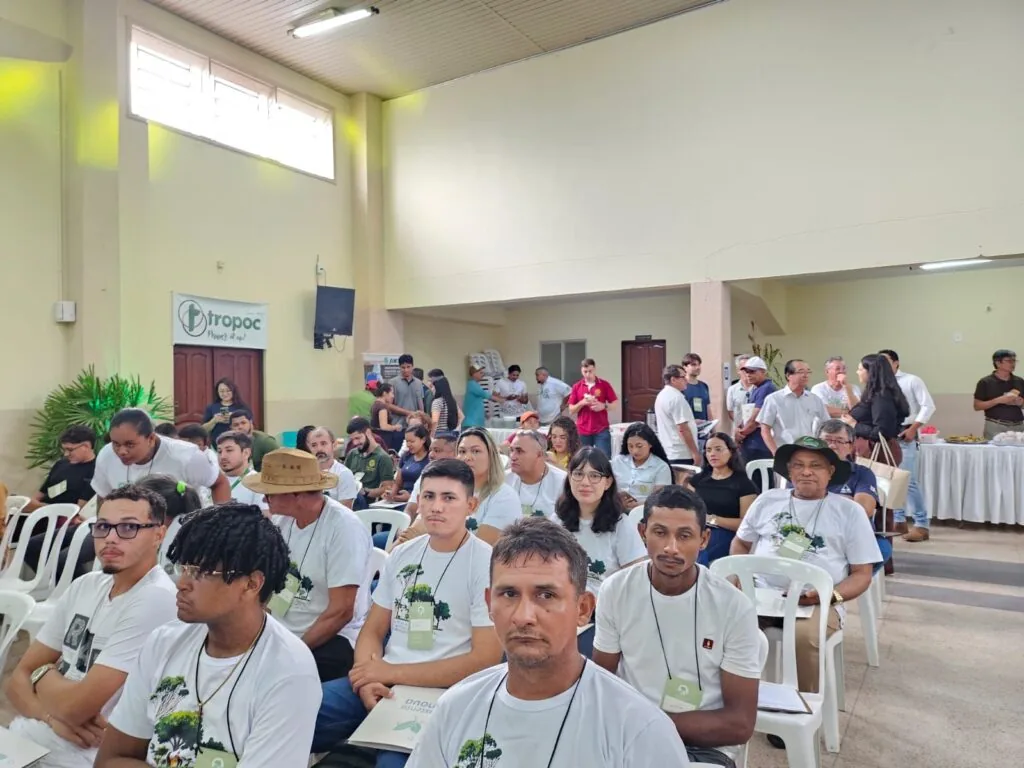
IPAM’s participation in and exchange of ideas at the 15th Seminar on Agroforestry Systems in Tomé-Açu are part of initiatives aimed at forest restoration and the implementation of agroforestry systems in Pará. Among these is the “Regulariza Rural” project, coordinated by the SFB (Brazilian Forest Service) and IICA Brazil (Inter-American Institute for Cooperation on Agriculture); the “Recovery of Altered Areas in the State of Pará under the Regulariza Rural Project,” in partnership with CI Brazil (Conservation International Brazil); the “Forest Restoration Project: Agroforestry Systems and Natural Regeneration in Tomé-Açu”; and the project “Forest Restoration in the Amazon: Promoting the Recovery of Altered Areas through Agroforestry Systems and Natural Regeneration in the State of Pará,” in partnership with Energisa.
IPAM* Communications Analyst
Suellen.nunes@ipam.org.br