Suellen Nnunes*
At least 2,700 people from rural and traditional communities in Pará and Amapá will benefit from “Frutificar Amazônia,” a project coordinated by IPAM (Amazon Environmental Research Institute), supported by the BNDES (National Bank for Economic and Social Development) through the Amazon Fund, which will strengthen bioeconomy production chains through the sustainable management of açaí and cacao, support for agro-industrialization, and the expansion of marketing opportunities.
Approved in 2018, the implementation of Frutificar Amazônia was delayed due to the suspension of the Amazon Fund’s operations. After the mechanism resumed operations, the project underwent technical and financial adjustments, and the contract was signed in April 2026, allowing activities to begin after nearly eight years of waiting.
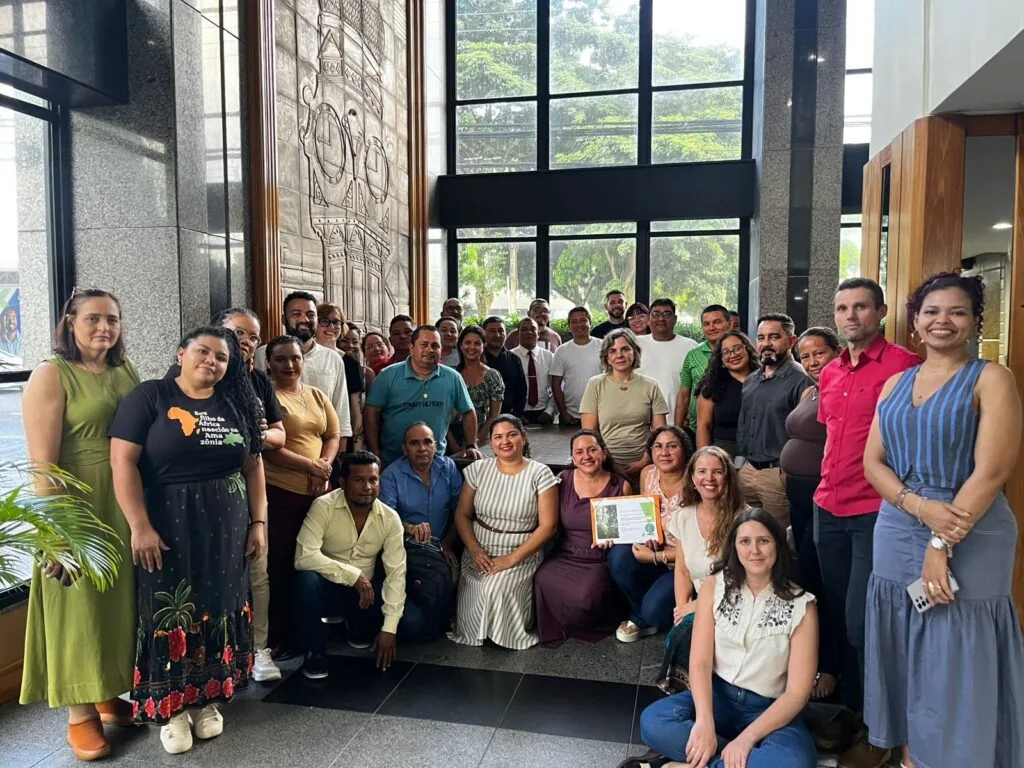
For Lucimar Souza, director of Territorial Development at IPAM, the project’s greatest strength is its focus on all links in the production chain. “More than 800 families will be directly involved and will receive support to improve production and adopt low-impact management techniques—particularly in the case of traditional communities—with the aim of increasing productivity. The project will also focus heavily on agro-industrialization and market access,” she explained.
“Another important distinguishing feature is that, this time, IPAM is not the sole project implementer. In the states of Pará and Amapá, there will be eight partner institutions working directly with family farmers, extractive communities, and quilombola communities,” she concluded.
Project in Progress
With an investment of R$ 38,988,636.52, the Frutificar Amazônia project will benefit people in 14 municipalities in Pará and Amapá through 2029, through initiatives aimed at strengthening the production chains for açaí, cacao, and other products of Amazonian socio-biodiversity.
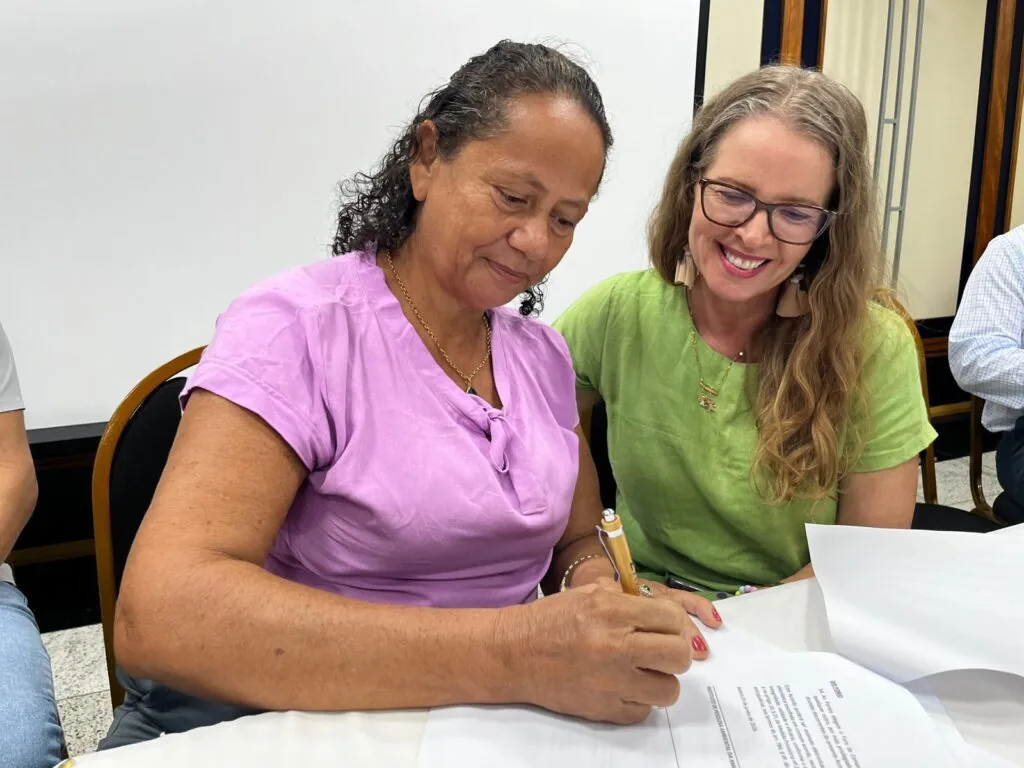
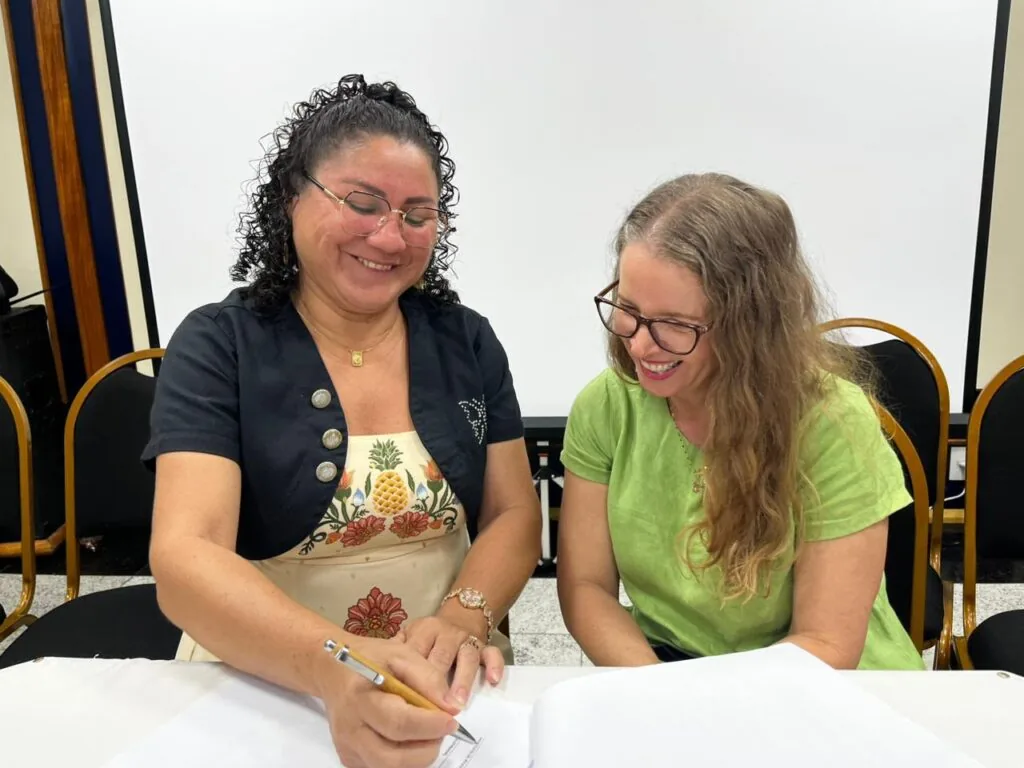
“Starting with this signing ceremony, following the meeting with partner organizations and the completion of the initial planning for the Frutificar Amazônia project, our goal is to return to the regional offices, establish the selection criteria for families and enterprises, and begin implementing the project. This is a project that will transform the lives of hundreds of families in the Amazon, especially in the states of Pará and Amapá,” commented Edivan Carvalho, IPAM’s Territorial Development Coordinator in Pará.
The project is being carried out in partnership with eight civil society organizations spread across three regions of the Amazon. In the Transamazônica/Xingu region, participants include FVPP (Viver, Produzir e Preservar Foundation) and ASAFAB (Association of Family Potato Farmers). In the Tapajós region, activities will be led by FOQS (Federation of Quilombola Organizations of Santarém) and FAMCEEF (Federation of Residents’ Associations and Communities of the Eixo Forte Agroextractive Settlement). In Amapá, the project includes AEFAC (Association of the Carvão Agroextractive Family School), AEFAM (Association of the Macacoari Agroextractive Family School), ATASB (Association of Agroextractive Workers of the Baquiá Gurupá Sector), and ASBAP (Association of Açaí Harvesters of Amapá).
The project’s activities include technical assistance, organizational strengthening, training, the establishment of agro-industries, and the development of marketing strategies for socio-biodiversity products.
Benefits and Agreements Signed
Among the results expected from Frutificar Amazônia are the provision of technical assistance focused on sustainable production to 352 rural properties, the training of 940 people, and the strengthening of 11 civil society organizations working to promote the bioeconomy in the Amazon. The project will also support the establishment, expansion, or renovation of 10 agribusinesses, increasing processing capacity and adding value to products such as açaí and cocoa in the served regions.
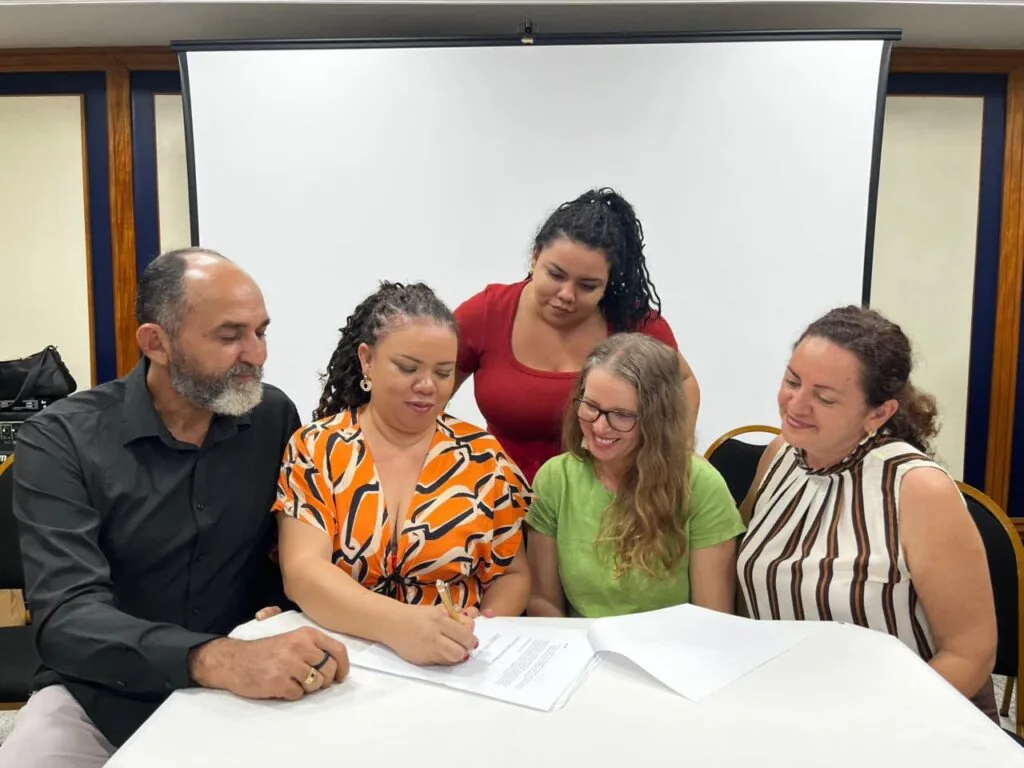
Gabriele Corrêa, vice president of AEFAM in Amapá, states that the project aims to strengthen the açaí production chain. “It’s the product we’re working with today in our region. All of this is intended to strengthen and improve the quality of life for our producers. So, it’s gratifying because it will bring producers together to improve the lives of our producers and the families in our community,” she said.
The initiative also calls
for
the restoration of degraded areas and the preservation of a living, healthy forest. Agroforestry systems (SAFs) will be implemented across 200 hectares, in addition to the productive restoration of another 300 hectares of degraded areas. The project will also promote the sustainable management of 960 hectares of forest, contributing to income generation for local communities and to the strengthening of regional economies based on the sustainable use of Amazonian biodiversity resources.
“The project is part of a development strategy that is already integrated into the FVPP’s development plan—a strategy focused on sustainable development. Frutificar aims to contribute to this process, particularly in terms of technical assistance and the vertical integration of production through the agro-industrial processing of products in the cocoa and açaí supply chains, always with a focus on sustainability,” he said.
The initiatives will be carried out over 42 months and will include training, governance, monitoring, and communication activities, as well as investments in infrastructure, equipment, and logistics to support sustainable production in the served territories.
“After years of waiting, this project represents a strengthening of the quilombola territories involved. It also empowers the beneficiary families and connects us to our ancestry, our existence, and our resilience within the quilombola territory. It’s a feeling of gratitude. I believe it has come at a strategic and very timely moment for the quilombola territories. We are living in a time when we understand that planting and harvesting are what we need to continue resisting in the territory. “This project empowers the quilombola population of Santarém,” explained Miriane Coelho, president of FOQS.
IPAM* Communications Analyst
Suellen.nunes@ipam.org.com