The web series “Sustainable Cocoa Production,” developed in partnership with CEPLAC (Executive Committee of the Cocoa Farming Plan) and IPAM (Amazon Environmental Research Institute), was launched on June 12, during the Cocoa Forum, held as part of the Chocolate Xingu 2026 program in Altamira, Pará.


The festival brought together producers, researchers, companies, public institutions, and representatives from the agricultural sector, showcasing the potential of an industry that includes nearly 35,000 cocoa producers in the state, approximately 95% of whom are family farmers.
Among the highlights of the program, the Altamira 2026 Cocoa Farming Forum focused on the theme “Cocoa in the Trans-Amazonian Highway and Xingu Regions: Sustainable Intensification and Value Addition in the Amazon.”
Sustainable Cocoa Production in Six Episodes
The web series brings together technical knowledge about Amazonian cocoa farming in accessible language, with the goal of expanding access to information for producers, students, teachers, and others interested in the sector.
Organized into six episodes and available for free on digital platforms, the initiative aims to contribute to the training of producers and the strengthening of cocoa farming in the Trans-Amazonian and Xingu regions. The production is part of IPAM’s Amazon Puzzle project, funded by NORAD (the Norwegian Agency for Development Cooperation).
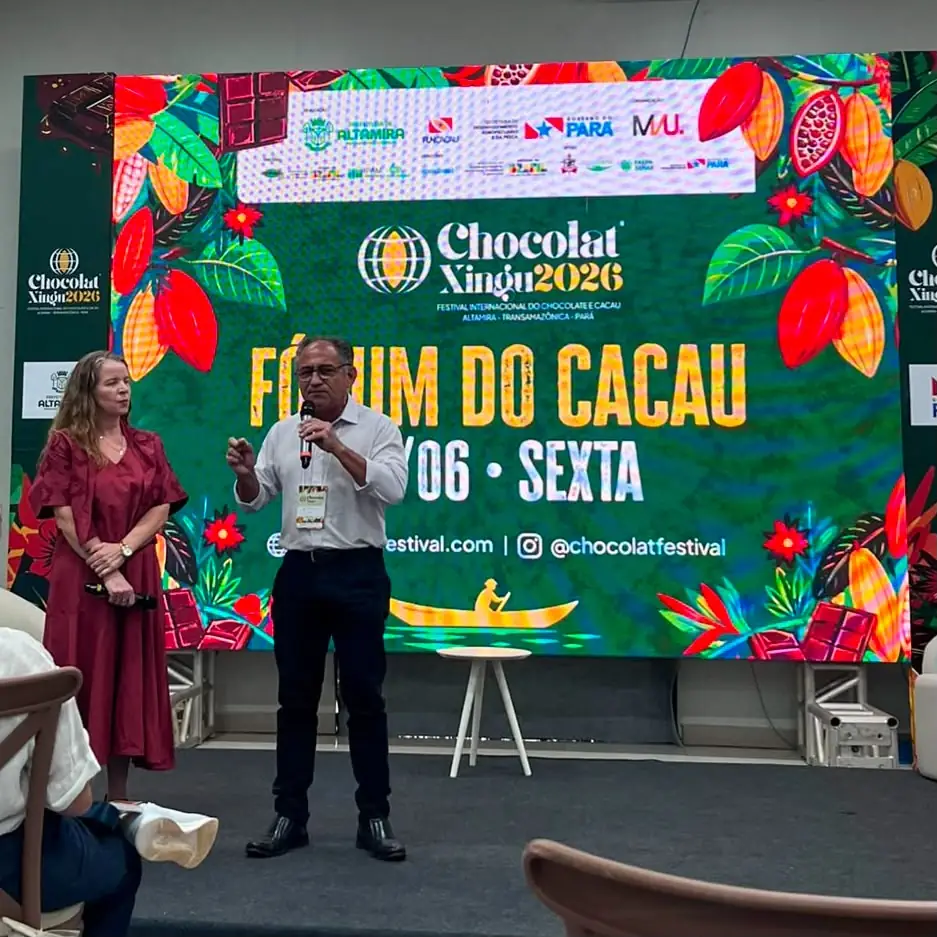
For Lucimar Souza, IPAM’s Director of Territorial Development, the web series is not institutional property but rather a resource for society. “Those who generate knowledge have a commitment to share that knowledge with society, and that is what we are beginning to do with this material,” she commented.
Artisanal Chocolate Production Seal
In addition to the debates and presentations, the Altamira 2026 Cocoa Farming Forum was the stage for achievements by producers supported by IPAM. During the event, the Certificate of Registration for the Artisanal Chocolate Production Seal was awarded to the Assurini Cacau enterprise, which is supported by IPAM’s Sustenta & Inova project. The seal guarantees that the products were crafted using traditional methods and in compliance with health and safety standards, with traditional processes and quality control, enabling larger-scale marketing and adding value to local production.
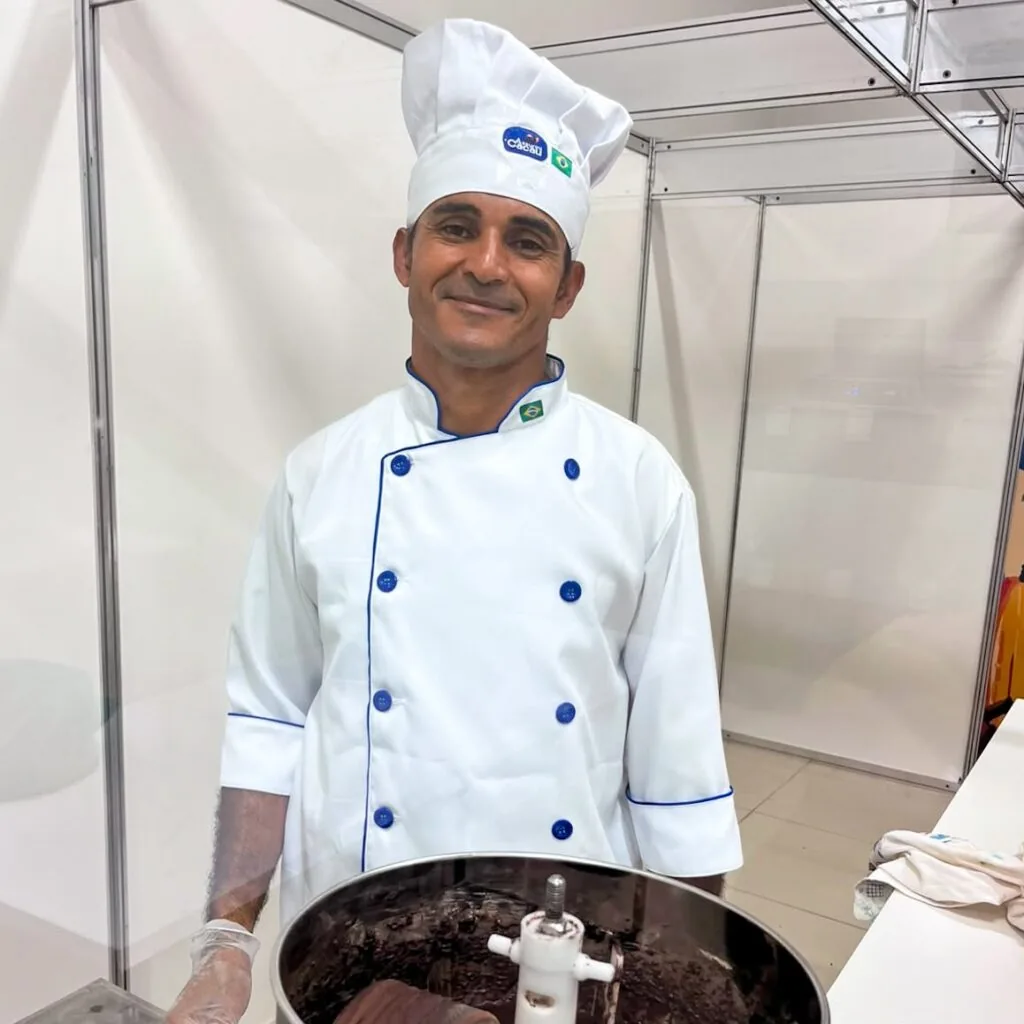
“It’s gratifying to receive this honor—a step forward—and also a surprise. Having worked with cocoa farming since I was a child, I know that knowledge often doesn’t receive the attention it deserves to add value to the farms and the cocoa nib—which is a commodity—but receiving this seal is an achievement. We’re looking forward to this certification, something we’ve been striving for for quite some time and will finally receive. I can only thank all the projects and supporters who have been with us on this journey,” says Cláudio Aquino, owner of Assurini Cacau.
This recognition highlights the quality, care, and identity of artisanal cocoa-based products, expanding opportunities to access new markets.
“The completion of these two milestones— the launch of the web series on sustainable cocoa, and the awarding of yet another Artisanal Production Seal for chocolate, symbolize the results of work built up over the years, based on solid partnerships, continuous technical assistance, and a commitment to supporting family farming. These are achievements that demonstrate how knowledge, cooperation, and perseverance can transform potential into concrete opportunities for families in the Transamazônica region,” says Elisângela Trzeciak, researcher and IPAM’s Transamazônica and Xingu regional coordinator.
Exhibition and Sustenta & Inova
According to a survey by the IBGE (2024/2025), Pará has established itself as the national leader in cocoa production, accounting for more than 47% of Brazil’s output. A total of 154,000 metric tons were produced during the period, a result of the expansion of cultivated area and increased productivity, particularly in the Transamazônica region, an area directly linked to initiatives such as Sustenta & Inova.
IPAM partnered with eleven beneficiaries of the Sustenta & Inova project, who presented their products and experiences to festival attendees. With technical assistance from the Institute, the project serves 250 farming families and 18 agro-industrial enterprises, in addition to supporting municipal environmental and agricultural agencies in six municipalities in the Transamazônica region.
Funded by the European Union and coordinated by Sebrae, the initiative implemented by IPAM in the Trans-Amazonian region seeks to develop and implement sustainable and innovative agricultural practices, as well as promote the development of value chains in the Brazilian Amazon, with a focus on biodiversity conservation, reducing deforestation and restoring the landscape, as well as mitigating and adapting to climate change.
IPAM* Communications Analyst
Suellen.nunes@ipam.org.br