Suellen Nunes*
The “Mangroves of the Amazon” project was born within LAMA (Mangrove Ecology Laboratory) at UFPA (Federal University of Pará) in 2021, based on the accumulated experience of researchers who were already working directly with coastal communities. The initiative is structured as a bridge between science and territory, with the aim of making knowledge more accessible and useful to those who live in the mangroves of Pará.
Combining environmental conservation and social empowerment, the project works on mangrove reforestation, environmental education, training in technologies adapted to the local reality, as well as psychosocial care and cultural initiatives.
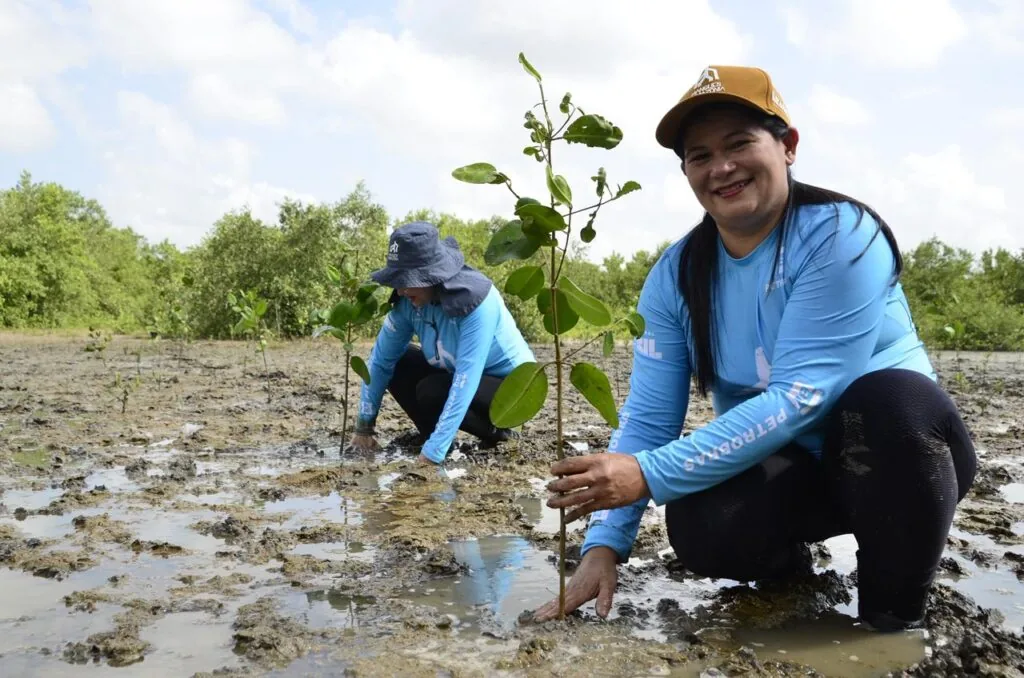
Mangroves play a strategic role in tackling climate change, especially in the coastal Amazon, which concentrates more than 7,200 km² of this ecosystem and is home to the largest continuous strip of mangroves in the world.
These areas act as natural barriers against rising sea levels, protecting the coastline and reducing the impacts of extreme events. In addition, they stand out as important carbon sinks, storing up to three times more carbon than the dryland Amazon rainforest.
A community construction project
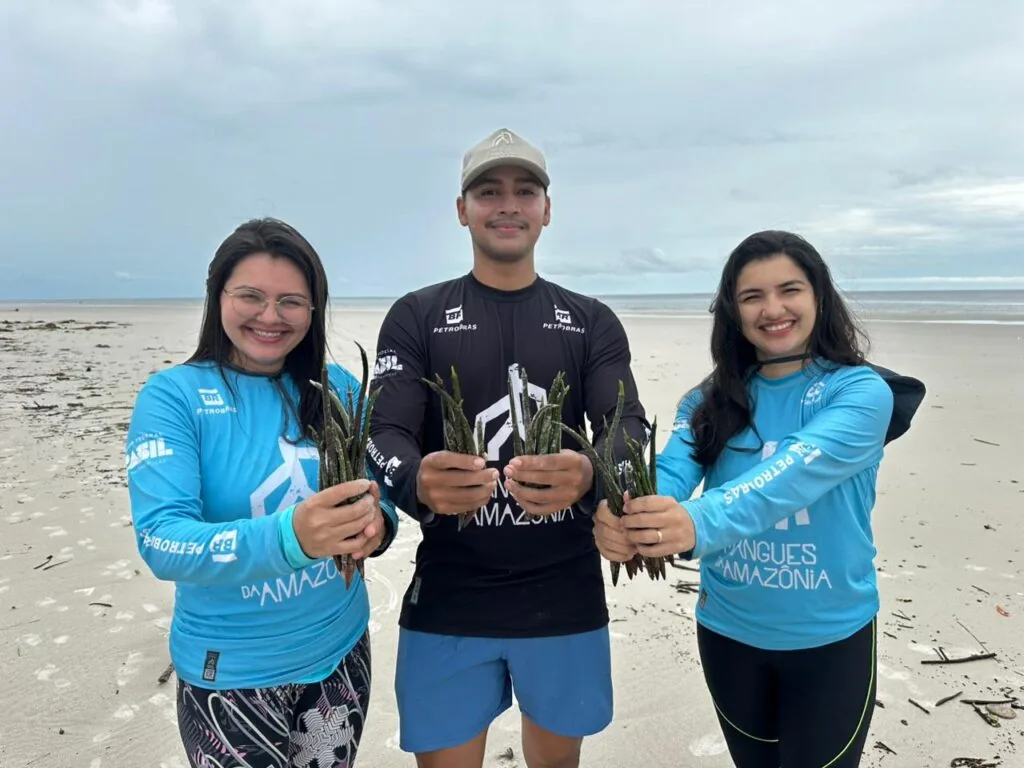
“Mangues da Amazônia” brings together a team of more than 50 professionals working continuously, as well as collaborators who are mobilized according to demand, strengthening an approach that combines technical knowledge and community engagement.
“The starting point for Mangues da Amazônia is the recognition that mangrove conservation is only possible thanks to traditional communities. In a region that includes around 20 marine conservation units, these populations are present and actively participate in all stages of the project, which was designed for and with them,” explains John Lennon Gomes, manager of “Mangues da Amazônia”.
“We’ve developed actions that range from involving children and teenagers in education clubs to hiring residents to work in nurseries, producing seedlings and recovering degraded areas. The fishermen contribute with their knowledge of the territory, and we hold discussions with women and provide psychosocial support to reinforce that the project doesn’t come from outside, but is built together with the communities,” he adds.
One of the challenges of this work is the region’s logistical difficulties. Although the Amazon concentrates around 80% of Brazil’s mangroves and maintains a high level of conservation thanks to traditional communities, it is still necessary to identify and recover degraded areas.
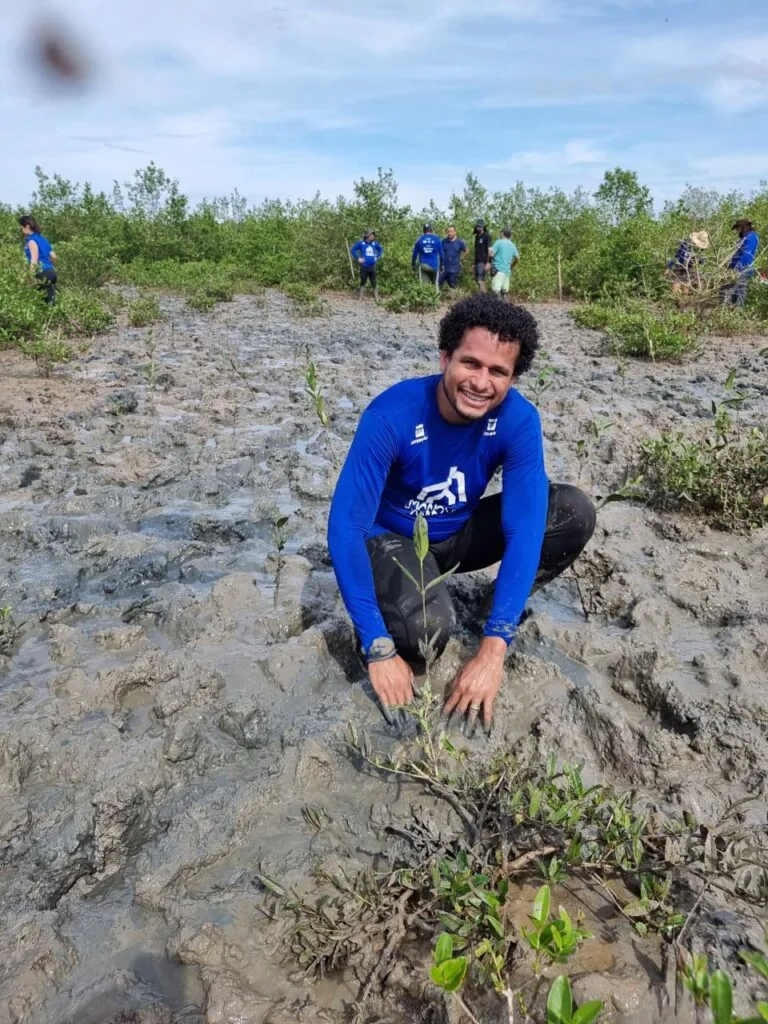
Mangroves also face challenges related to public perception, often associated with worthless environments. However, they are essential ecosystems for biodiversity and the local economy: around 80% of marine species of commercial interest depend on them at some stage of their life cycle. They also guarantee food security, generate income and have a strong cultural value for traditional communities.
Productivity indicators
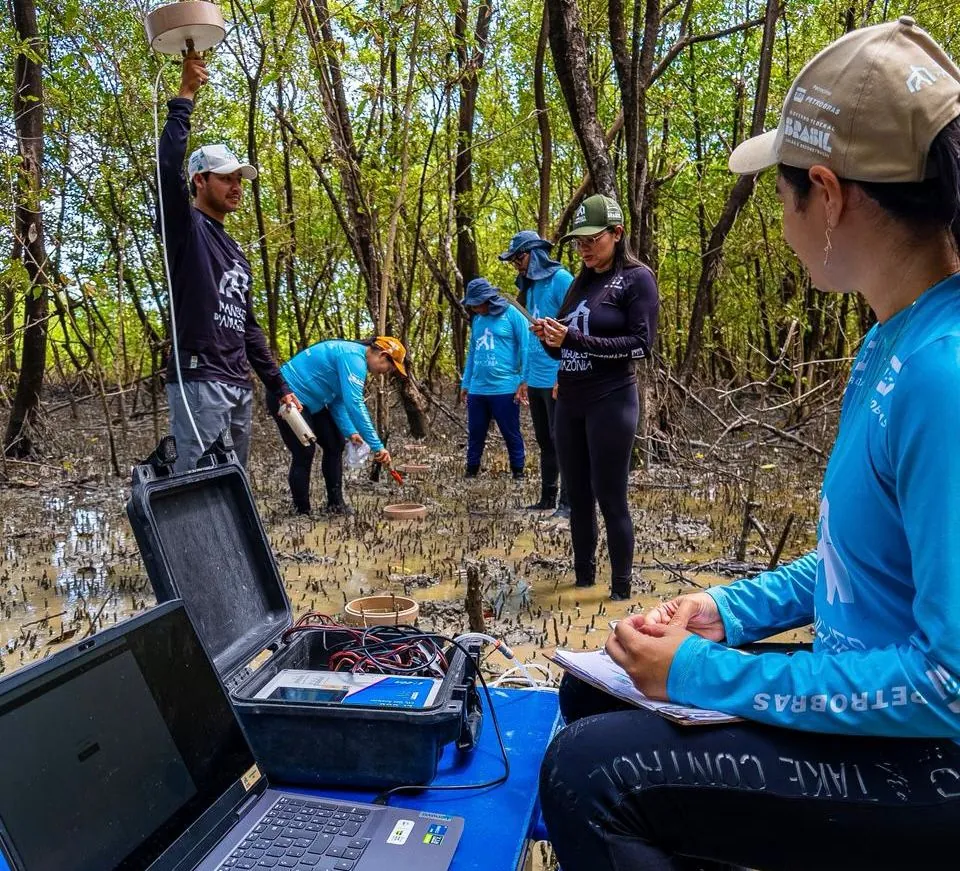
The project is monitored using indicators such as the number of people assisted, the scope of the actions, training hours, psychosocial assistance and environmental results. “Between 2024 and 2025, more than 500 people were monitored continuously, while another 14,000 took part in one-off actions and around 8,500 were reached indirectly. In the same period, we carried out more than 1,400 hours of training and 401 hours of psychosocial care,” says John.
Mangues da Amazônia” has already recovered approximately 24 hectares of mangrove forest, planting more than 110,000 seedlings. Even so, the main results are seen in the transformations experienced by the communities, especially among children, young people and families.
To find out more about the project, visit www.manguesdaamazonia.org.br or follow the social networks at @manguesdaamazonia.
IPAM Communications Analyst*.