Suellen Nunes*
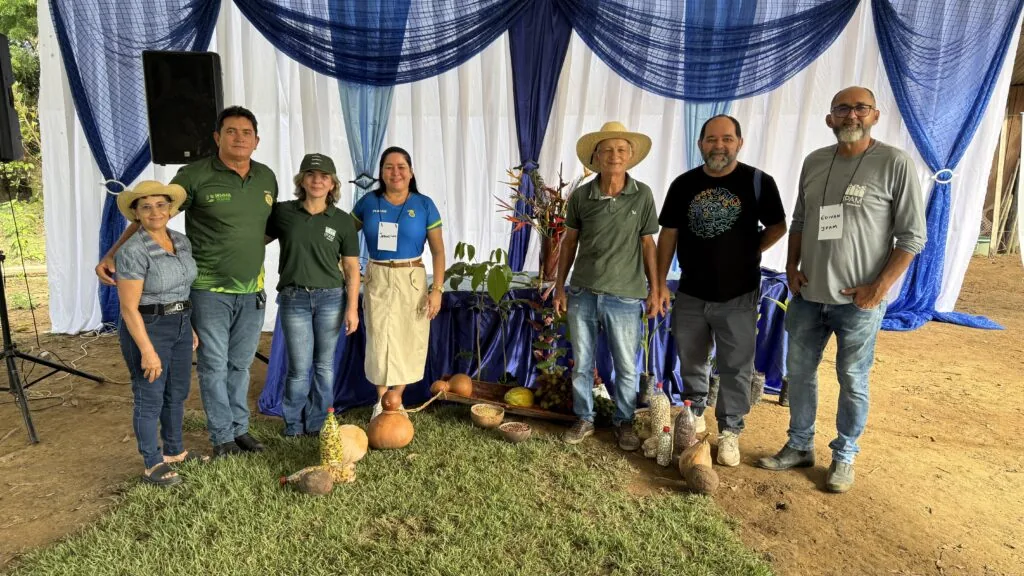
The municipality of Placas, in the southwest of Pará, hosted the event “Planting Techniques in Agroforestry Systems and Exchange of Experiences”. The program is part of the “Forest Restoration Project in the Amazon: Recovering altered areas with SAFs in the state of Pará” and brought together around 180 participants from 14 municipalities in Pará.
The aim of the event was to promote the exchange of experiences and strengthen links around the use of SAFs (Agroforestry Systems). The meeting was attended by technicians, family farmers and representatives of civil society organizations and public authorities.
Douglas SEMMA
Agroforestry systems have had a direct impact on the income of family farmers by combining agricultural production with restoration techniques. In addition to promoting economic gains, the initiative contributes to environmental conservation, reducing greenhouse gas emissions, preserving biodiversity and strengthening water resources in the regions.
“During the activity, the participants followed the stages of implementing agroforestry systems, which follow production arrangements made up of perennial crops combined with forest species native to the region. The participants were able to follow and practice the stages linked to preparing the area, techniques for opening the cradle, fertilizing, planting techniques in traditional cradles and through furrows, among other aspects,” explained Edivan Carvalho, researcher and coordinator of IPAM (Amazon Environmental Research Institute) in Pará.
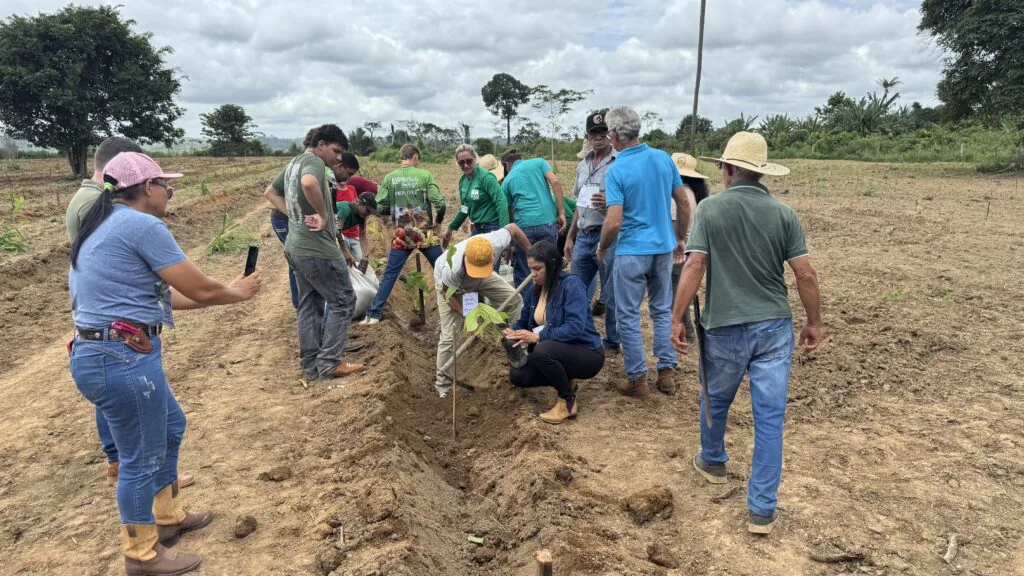
Douglas SEMMA
The project developed by IPAM aims to contribute to the implementation of the “Regulariza Rural Project” by implementing and monitoring 600 hectares of restoration and recovery of native vegetation in areas of permanent preservation, legal reserve and restricted use, prioritizing the introduction of agroforestry systems, with a view to environmental suitability and income generation for family farming in the state of Pará.
“The field day promoted the exchange of experiences and knowledge, highlighting innovations in planting techniques, with an emphasis on more productive and sustainable systems. The meeting strengthened the dialog between the different players in the production chain, contributing to the alignment of practices, the dissemination of technologies adapted to the local reality and the improvement of management strategies. The moment was also fundamental for clarifying doubts and collectively building solutions aimed at the environmental regularization of properties and the sustainable development of rural production,” emphasized Elisângela Trzeciak, IPAM’s researcher and regional coordinator for the Transamazon and Xingu regions.
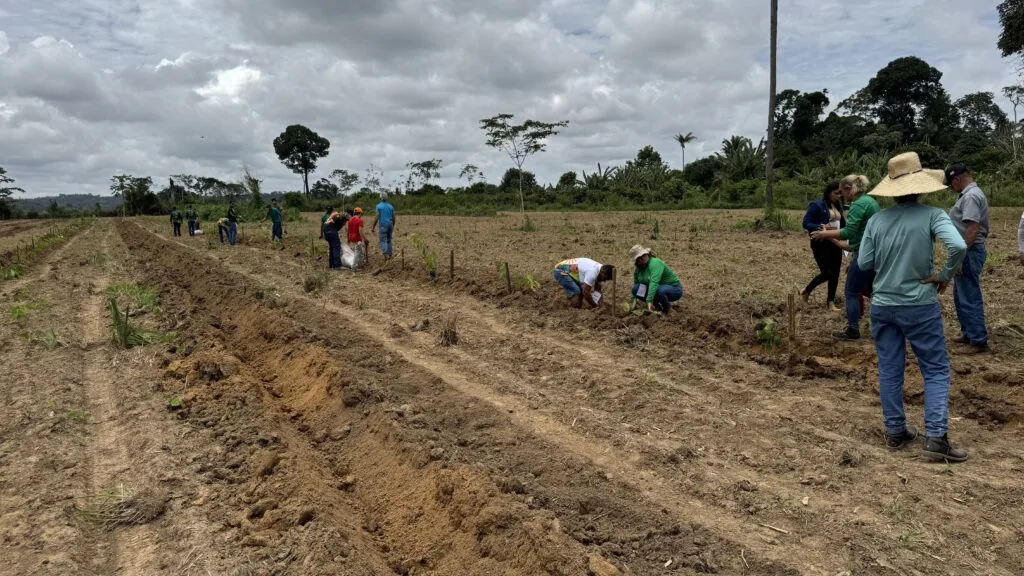
Douglas SEMMA
The difference lies in the integration of science, traditional knowledge and regenerative agriculture, promoting a model of productive restoration. The implementation of SAFs – Agroforestry Systems – as an impact business seeks to combine ecosystem services with improved food security and local income.
For Tiago Peniche, a representative of Semas (Pará’s State Secretariat for the Environment, Climate and Sustainability), the idea is to strengthen productive restoration. “Semas is monitoring the implementation of the areas and has contributed directly to the environmental regularization of these rural properties. These efforts are in line with the state government’s strategy of encouraging low-carbon agriculture, strengthening productive restoration where there are environmental liabilities,” he said.
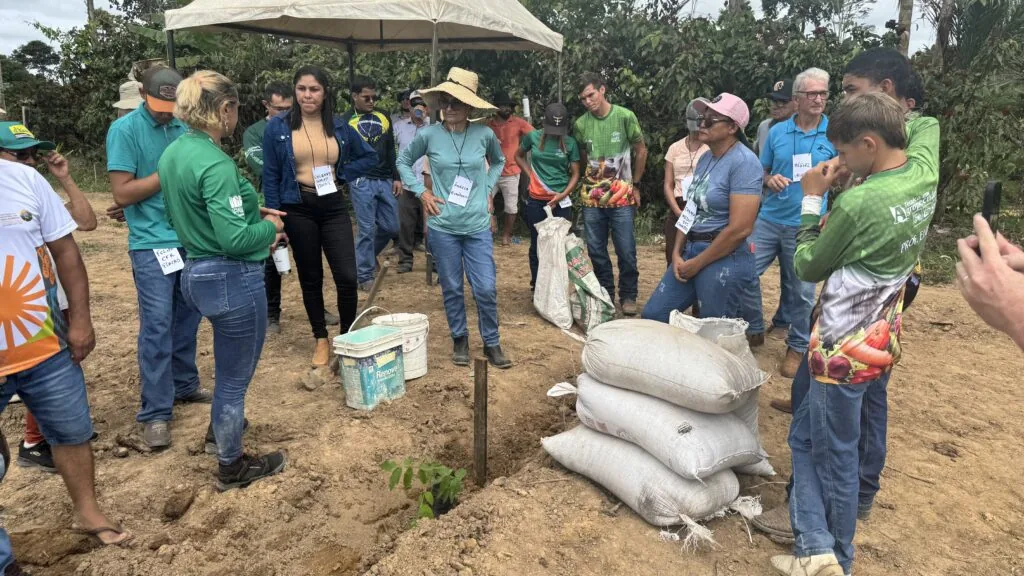
Douglas SEMMA
The initiative is part of the “Projeto Regulariza Rural” project, coordinated by the SFB (Brazilian Forestry Service) and IICA Brazil (Inter-American Institute for Cooperation on Agriculture), with financial support from KfW (German Development Bank), and aims to support the states of Pará, Mato Grosso and Rondônia in implementing the environmental regularization policy and monitoring native vegetation, strengthening environmental governance and consolidating the implementation of the Forest Code. In Pará, the actions are promoted by IPAM, in partnership with SEMAS.
IPAM Communications Analyst*.