Suellen Nunes*
The advance of deforestation in the transition region between the Cerrado and the Amazon has caused profound changes in the availability of water in small river basins, increasing the risk of flooding in the rainy season and reducing water availability in the dry season.
This is revealed by the study Hydrological impacts of deforestation on the flow dynamics of small river basins in the Cerrado-Amazon transition region in Brazil, which involved researchers from IPAM (Amazon Environmental Research Institute) and analyzed, through field monitoring, how different levels of vegetation cover influence river flow.
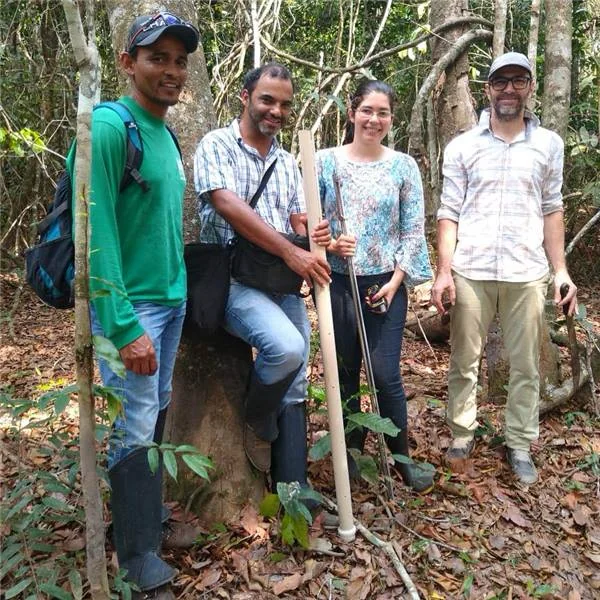
The research evaluated eight river basins in eastern Mato Grosso over three years, covering areas with different degrees of slope and native vegetation cover, ranging from 10% to 80%.
The results show that the most deforested basins showed a consistent increase in the annual and daily volume of water run-off, as well as greater seasonal variability. In these areas, more intense flow peaks were also recorded during heavy rain events, indicating a greater risk of flooding and rapid changes in the behavior of watercourses.
Breaking the natural balance
The data indicates that deforestation alters the balance of the hydrological cycle by reducing natural processes such as evapotranspiration and infiltration of water into the soil. The conversion of forest areas into pastures or crops reduces the landscape’s capacity to retain water, favoring surface runoff. As a result, the study found that more deforested basins can record up to double the annual water flow compared to areas that maintain more native vegetation cover.
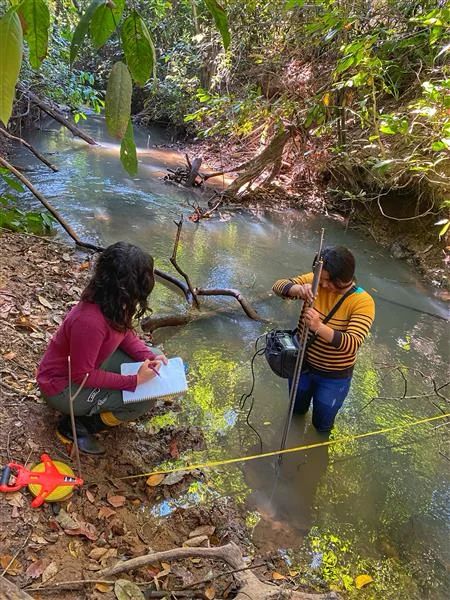
“We were able to monitor the flow of streams continuously, with hourly measurements, in a region with little hydrological data. This allowed us to understand how deforestation accelerates rainfall runoff, increases the risk of flooding and reduces the water available in the dry season. The results show that it is necessary to consider seasonality, topography and soils to assess the impacts on water security, especially in years of severe drought,” says IPAM researcher and lead author of the article, Hellen Almada.
Despite the increase in water volume during the rainy season, the researchers identified an opposite effect during the dry season. In basins with a high level of deforestation, the flow in the dry season represents only 10% of the annual flow, while basins with conserved vegetation maintained approximately 30% of the water flow in this period, even in years with lower rainfall.
As well as highlighting the environmental impacts, the research points to ways to reconcile agricultural production and the conservation of water resources. The study indicates that maintaining at least 50% of native vegetation in areas with a steeper slope can contribute to greater stability in water availability throughout the year, reducing peaks in the rainy season and sustaining the flow in the dry season. And it reinforces that territorial planning and strategic conservation of vegetation are key elements in guaranteeing long-term water security and productivity.
“The results show that deforestation has a direct impact on water security and reinforce the importance of conserving native vegetation and better planning land use,” said Leonardo Maracahipes-Santos, a researcher at IPAM and one of the authors of the article.
IPAM Communications Analyst*.