By Sara Leal*
São Paulo Avenue, September 5, 2024, 3:00 p.m. Traffic pollution causes the concentration of pollutants (classified as particulate matter) to reach 31.87 ug (micrograms) per m³—twice the recommended level. On the same day and at the same time, far from there, in the Parque do Aripuanã Indigenous Reserve in Vilhena (RO), a cloud of smoke rises from the native vegetation. The recorded concentration of pollutants is 197.32 µg/m³—13 times higher than the recommended level. The source? Wildfires and forest fires that have spread throughout the region during one of the state’s most severe droughts.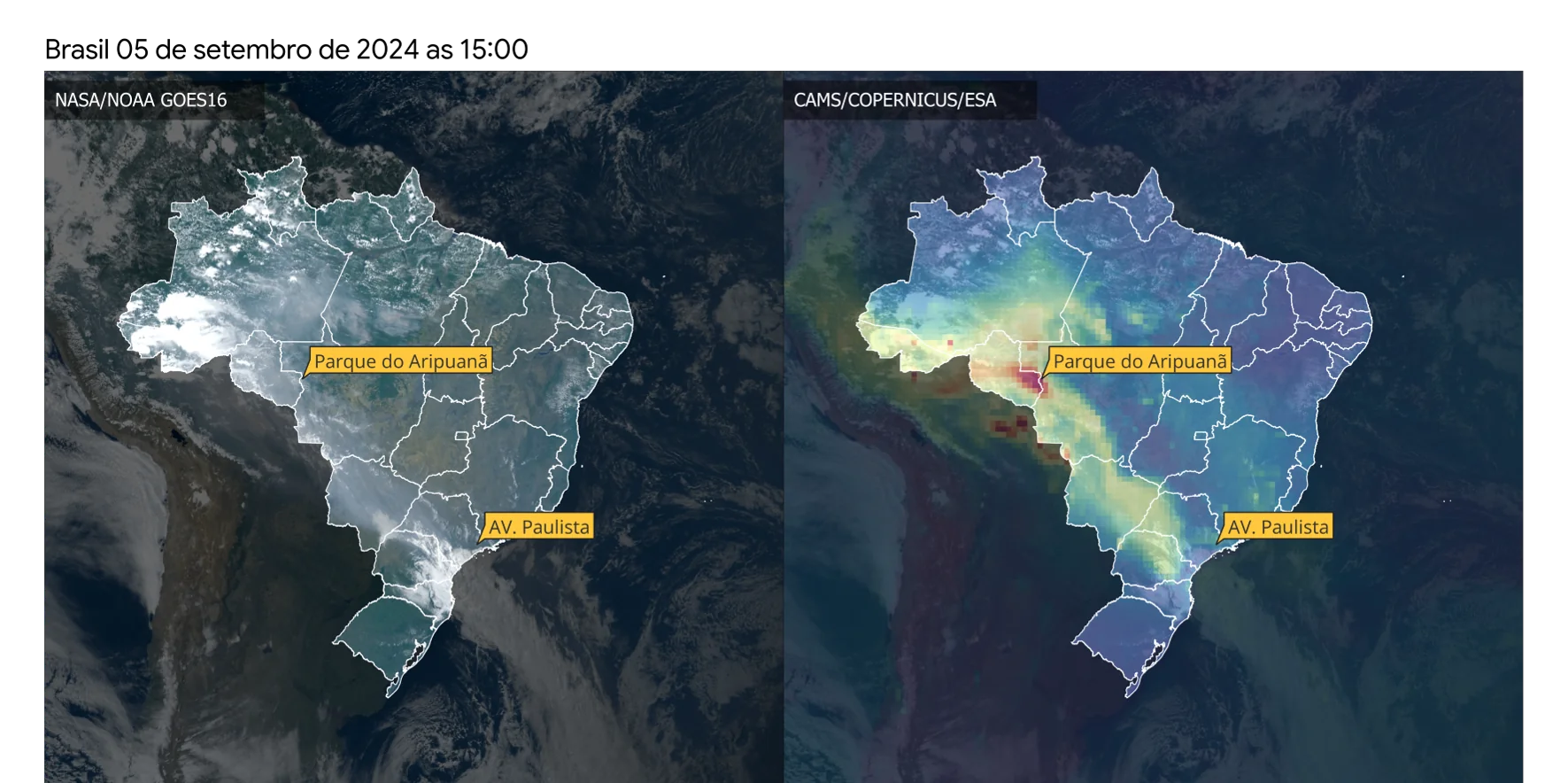
To expand air quality monitoring in Brazil, especially in areas where indigenous peoples and traditional communities live, IPAM (Amazon Environmental Research Institute) launched RedeAr, a platform that provides real-time data on the concentration of particulate matter in the atmosphere, emitted primarily by wildfires.
Researchers involved in the initiative developed a national sensor that is cheaper, more durable, and adapted to the tropical climate. In addition to measuring airborne particulate matter concentrations, the device also collects a wider range of data, such as temperature, pressure, and humidity.
Exposure to PM 2.5—fine particulate matter associated with wildfires—is linked to 4.2 million deaths per year worldwide, as well as cardiovascular and respiratory diseases and lung cancer. In 2024, these particles—30 times smaller than the thickness of a strand of hair—covered parts of the Amazon for up to 138 days.
“The people in Brazil who contribute least to deforestation—such as indigenous peoples and traditional communities—may be breathing the worst air in the country. And it is precisely in the areas where these populations live that we have the greatest data gap regarding pollution,” says Filipe Arruda, a researcher at IPAM and the founder of RedeAr.
Currently, the initiative has 93 air-quality sensors installed in 13 states, including all of the Legal Amazon and some in the Cerrado and the Pantanal. The plan is to expand the initiative throughout Brazil.
In addition to monitoring air quality in cities, the platform provides frequent updates on conservation areas, rural areas, and schools. The data can be used to support public health and environmental policies, as well as to educate and engage the public about the impacts of wildfires.
“Wildfires cause billions in losses each year—whether through carbon emissions, strain on the Unified Health System, or airport shutdowns. The forecast of an El Niño intensified by rising temperatures is a perfect recipe for more fires. That is why we need a monitoring network that engages communities in the process,” says Ane Alencar, IPAM’s Director of Science.
*IPAM Communications Coordinator