For IPAM (the Amazon Environmental Research Institute), the drop in deforestation in the Amazon and Cerrado is considered a step forward, but still insufficient for the definitive protection of Brazil’s two largest biomes.
The data, released by INPE (National Institute for Space Research) on Friday (9), shows that by 2025, deforestation had fallen by almost 9% in the Cerrado and the Amazon. This is the third drop in a row and the best result in eight years. The reduction continues the trend officially observed over the last three years.
“The reduction has been continuous, which is beneficial from an environmental and political point of view, because it shows that it is possible when you have the political will. However, we still need to implement the mechanisms that already exist to maintain zero deforestation,” explains IPAM’s senior researcher, Paulo Moutinho.
For him, there are three main challenges to meeting the goal of zero illegal deforestation by 2030: investing in initiatives that protect the forest, such as the bioeconomy; increasing productivity in agriculture and livestock without requiring new land, especially with small and medium-sized farmers; and having greater control of deforestation in public forests, both designated and not designated, the latter being a priority.
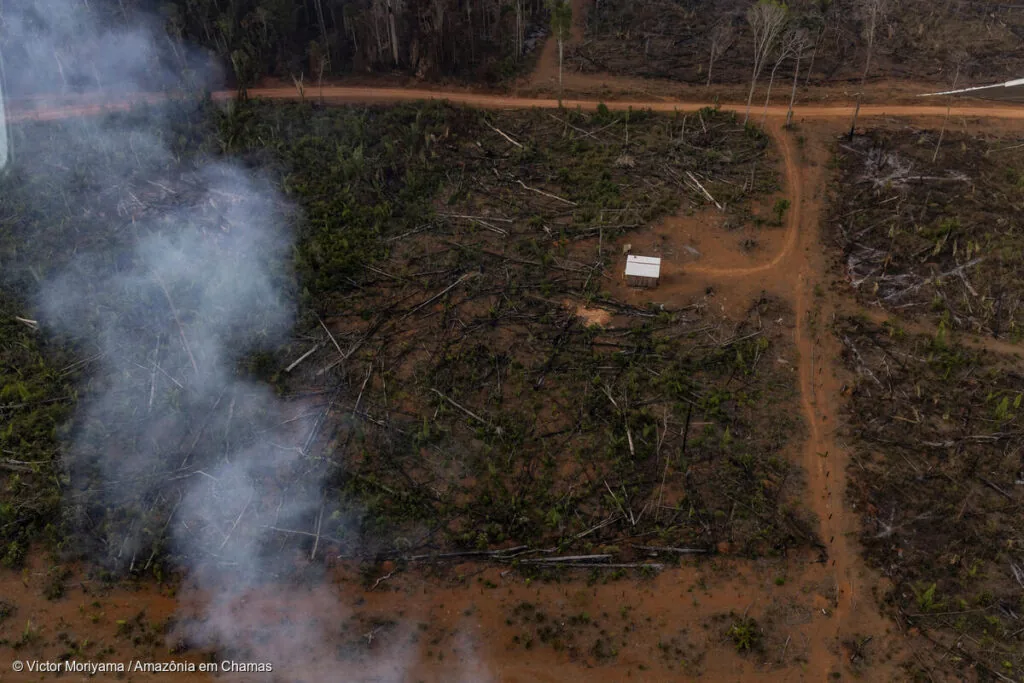
“Today, earmarked and non-earmarked public lands account for around 40% of all deforestation in the Amazon. Despite the reduction in the suppression of native vegetation in these areas, there is still a strong action by land grabbers who take advantage of the land ‘limbo’, since there is no clear destination defined by law,” he points out.
Public areas with land grabbing suffer from deforestation (Photo: Victor Moriyama/Reproduction)
Unallocated public areas are managed by the public forest management law and are allocated within a set of rules. These territories cannot be ceded to the private sector, but are instead destined for traditional peoples and communities such as indigenous peoples, extractivists, quilombolas, among others who maintain and live off the standing forest.