By Sara Leal*
Landowners and agricultural companies who were paid for five years to maintain the surplus of native vegetation continue to conserve their areas even after the end of the payments for the first stage of CONSERV, a project carried out by IPAM (Amazon Environmental Research Institute) in the Cerrado and the Brazilian Amazon.
After proving the thesis that it is possible to reduce legal deforestation through financial compensation, CONSERV has established itself as a safe model that can be scaled up.
Between 2020 and 2024, the project signed 32 contracts with landowners and companies in the states of Mato Grosso, Pará and Maranhão. More than 27,000 hectares of native vegetation were protected in addition to the legal reserve, i.e. that which could be legally suppressed. Of these, 7,000 hectares are still being paid for by contract.
In order to take part in CONSERV, properties are checked for compliance with the law, such as maintenance of the legal reserve and APPs (Permanent Preservation Areas), with continuous monitoring. The contracted areas totaled more than 54,000 hectares of legal reserve and almost 19,000 hectares of APPs, adding up to a total of more than 105,000 hectares of conserved native vegetation.
“When I informed the producers about the end of the payments, to my surprise and happiness, practically all of those who had contracted opted to continue conserving,” emphasizes André Guimarães, IPAM’s executive director. “These people not only understood the importance of their role as food producers, but also as stabilizers of the planet’s climate.”
The maintenance of ecosystem services, which provide humidity and regulate local temperatures, for example, was the benefit most perceived by the rural properties that took part in the experiment and decided to continue protecting native vegetation.
Valuing and maintaining biodiversity
“The CONSERV experience was something we had wanted for a long time and it has done us good. Conserving ends up being a pleasure,” says Redi Biezus, a rural producer in Sapezal (MT), a former CONSERV participant who also chose not to suppress the native vegetation he had previously contracted.
“I always saw the project as something pioneering and it ended up raising awareness and breaking down the resistance of many people, so much so that several people in the region wanted to join,” he says.
In addition, Biezus believes that providing different treatment for rural landowners who take part in conservation initiatives, for example by seeking support to boost the activities carried out on the property, would encourage even more people to take part.
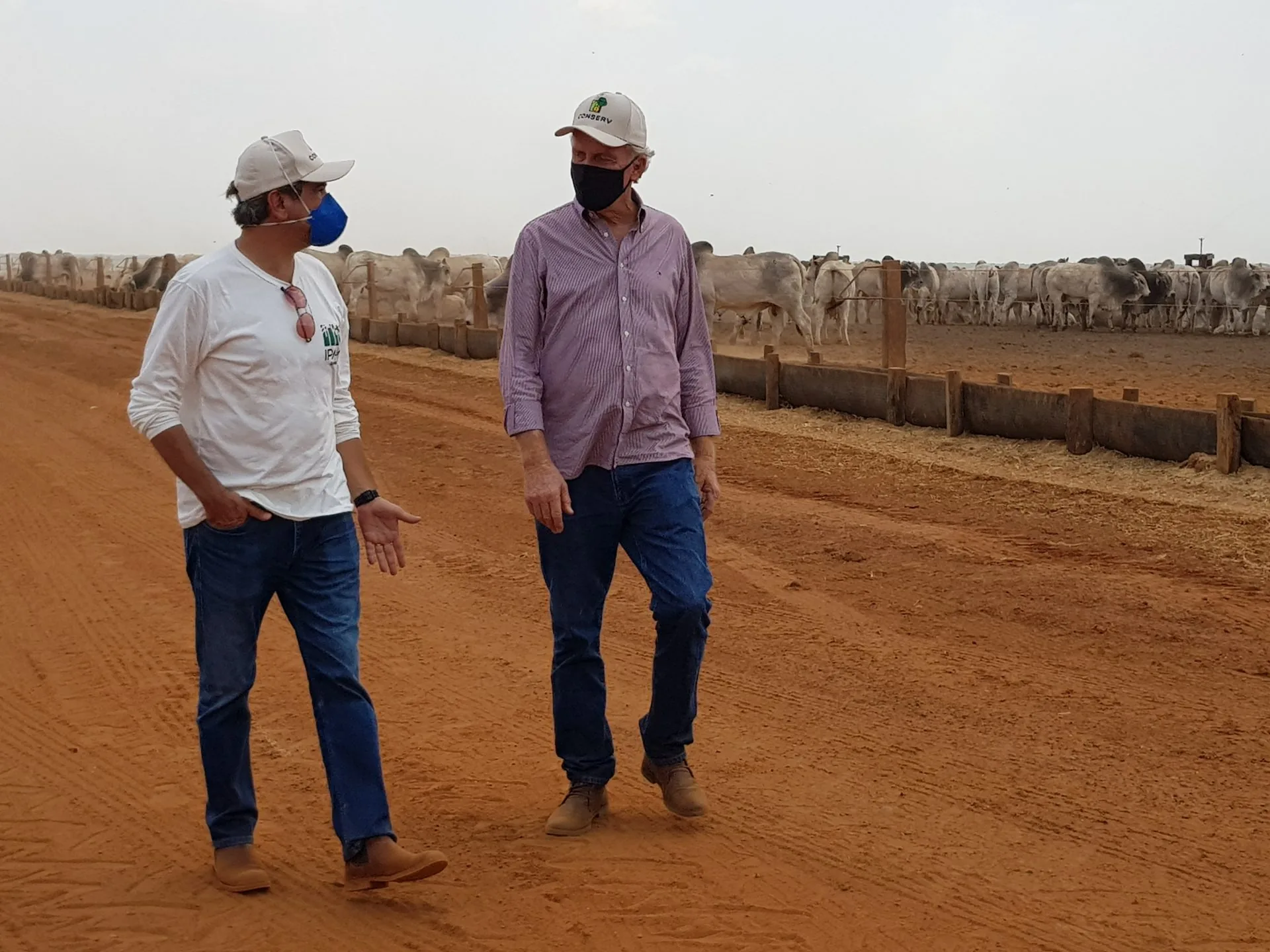
André Guimarães, executive director of IPAM, visiting the property of Redi Biezus, a rural producer (Photo: Sara Leal/IPAM)
Motivated by CONSERV, former participants in the project in the region created a fire brigade started by Carlos Roberto Simoneti, one of the pioneers to join the initiative. Sapezal encompasses the Cerrado and Amazon biomes. According to data from MapBiomas, the two biomes together have burned 86% of their area in the last 40 years.
The producer invested part of the amount paid by the initiative in fire-fighting actions, such as the purchase of a water truck and courses to train his employees against fires, especially during the dry season.
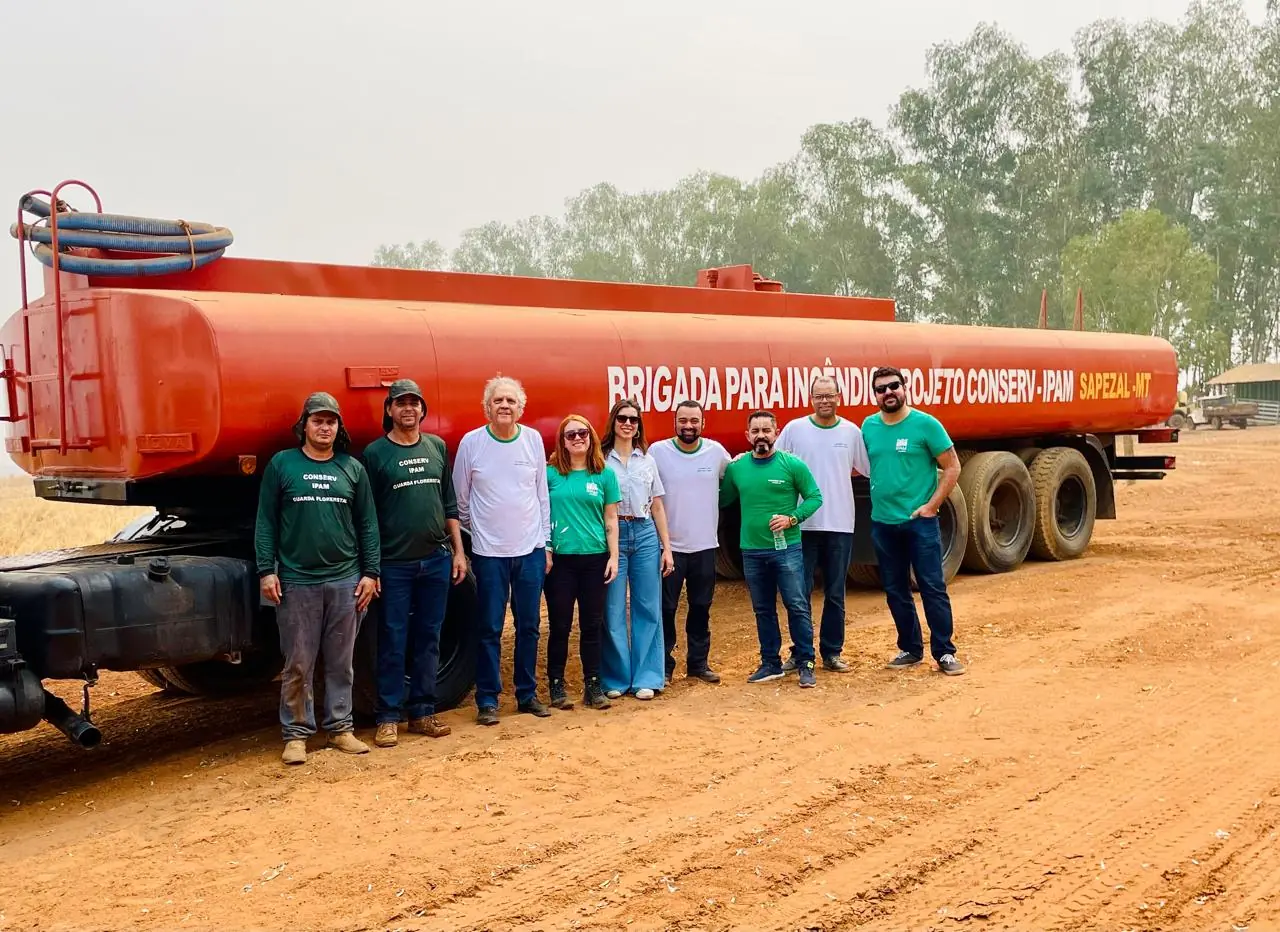
Fire-fighting truck bought with money paid by CONSERV (Photo: IPAM)
Simoneti says that animals are often seen on his property, including jaguars with cubs. “That’s because we’re conserving it, we don’t let it catch fire, so there are no words to describe how positive the experience with CONSERV has been. My children also want to carry on with the idea of continuing to conserve and we still hope that another opportunity like the project will arise,” says the landowner.

Record of a jaguar spotted on Carlos Roberto Simoneti’s property (Photo: Personal archive)
“These people saw a gain beyond the financial, they began to look at their role in the world in a way that was more in line with the planet’s current challenges. This is an intangible result, difficult to measure, but perhaps the most important aspect of CONSERV,” says André Guimarães.
Good for the climate, good for business
SLC Agrícola was one of the companies that decided to keep the areas that were previously part of CONSERV, “We see strategic value in maintaining environmental assets and adopting practices that promote ecosystem services. In addition, we understand that conserving areas beyond legal requirements strengthens the company’s reputation, improves relationships with stakeholders and contributes directly to global goals for tackling climate change,” says Tiago Agne, SLC’s Sustainability Manager.
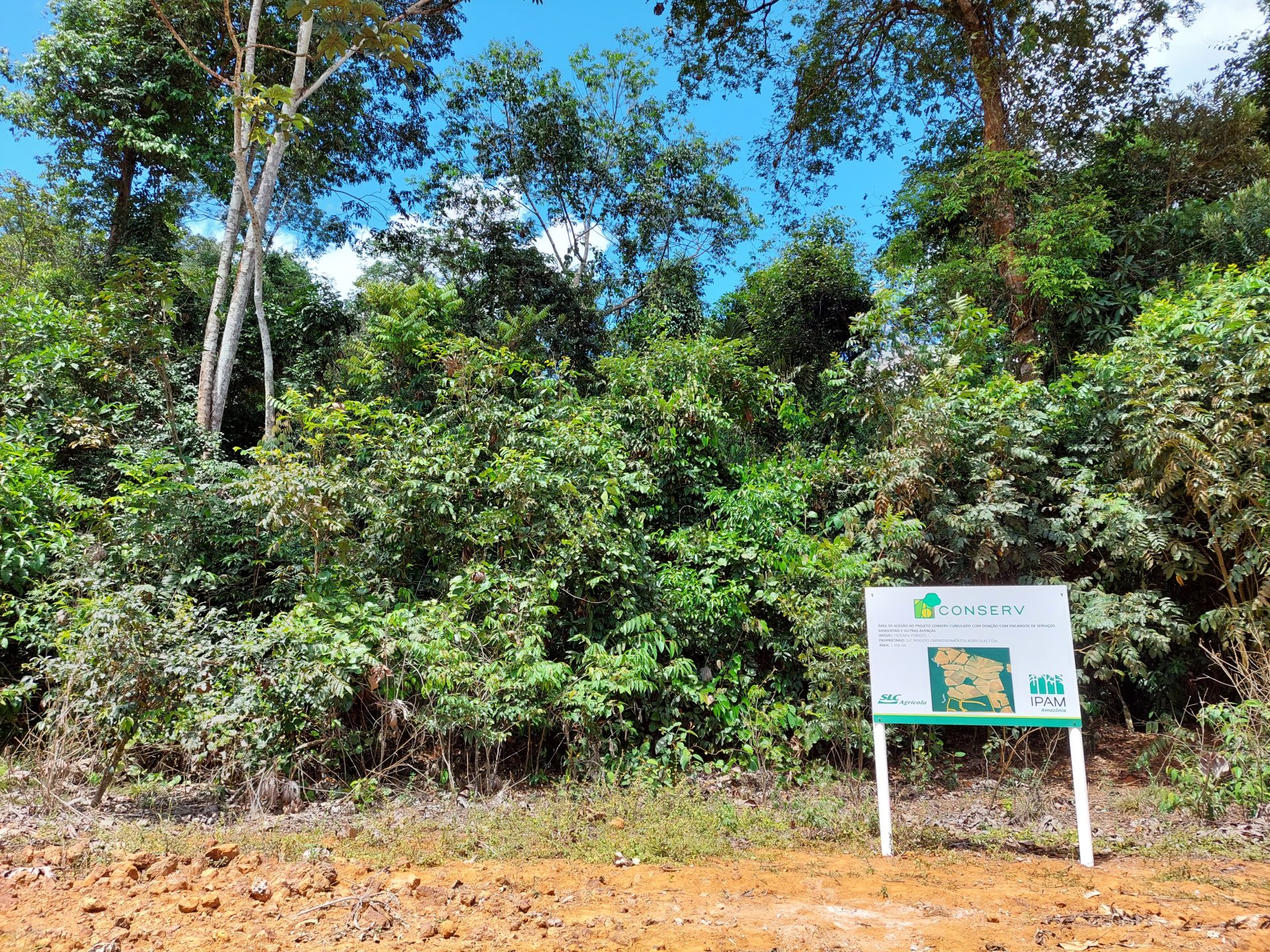
At the time of signing the contract with CONSERV, SLC Agrícola installed a sign in a conserved area indicating its participation in the project (Photo: Sara Leal/IPAM)
The Amaggi company also chose not to suppress the surplus native vegetation. “The project helped broaden the dialog about market mechanisms and public policies capable of taking into account the efforts of producers who maintain preserved areas beyond the legal minimum,” explains Fabiana Reguero, Amaggi’s Socio-Environmental Manager.
For her, projects like CONSERV help demonstrate that it is possible to reconcile competitive agricultural production with the protection of ecosystems. “We would like it to gain scale and become a permanent market mechanism. Initiatives like this show the world that Brazilian agriculture is willing to innovate and make concrete commitments to environmental preservation and the fight against climate change,” he adds.
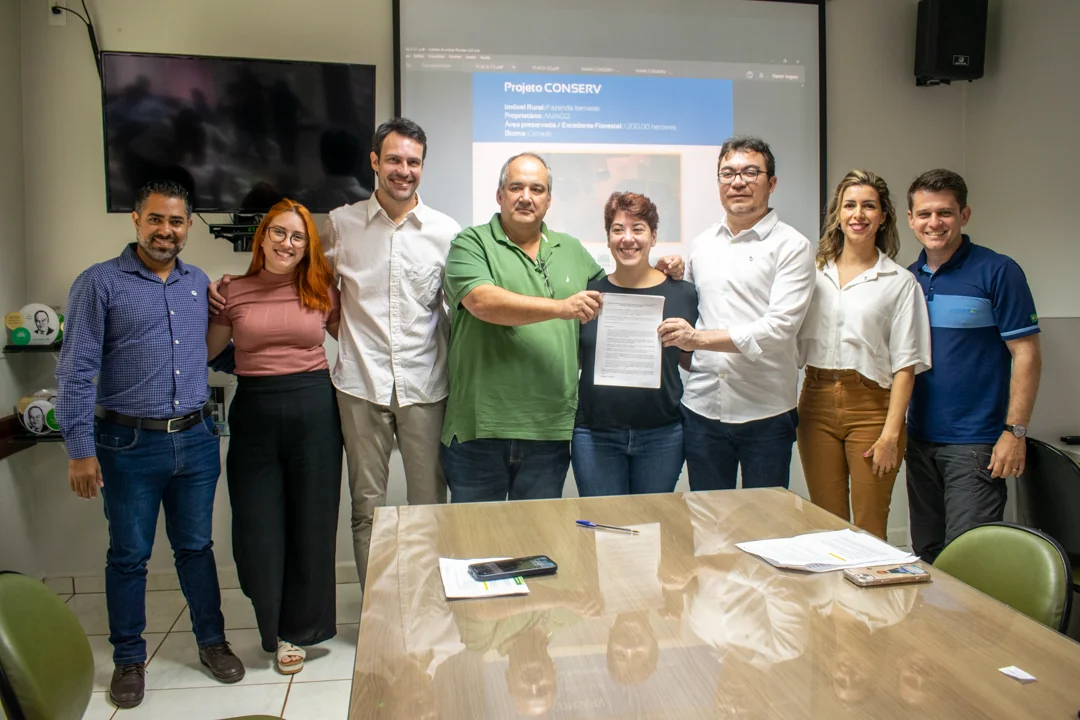
Contract signing between IPAM, through CONSERV, and Amaggi (Photo: Sara Leal/IPAM)
Recovery of degraded areas and ecological corridor
The benefits of CONSERV go beyond the area directly conserved by the initiative. After the contracts are signed, the CONSERV team makes technical recommendations for improvements to rural properties, which culminate, for example, in the recovery of degraded areas.
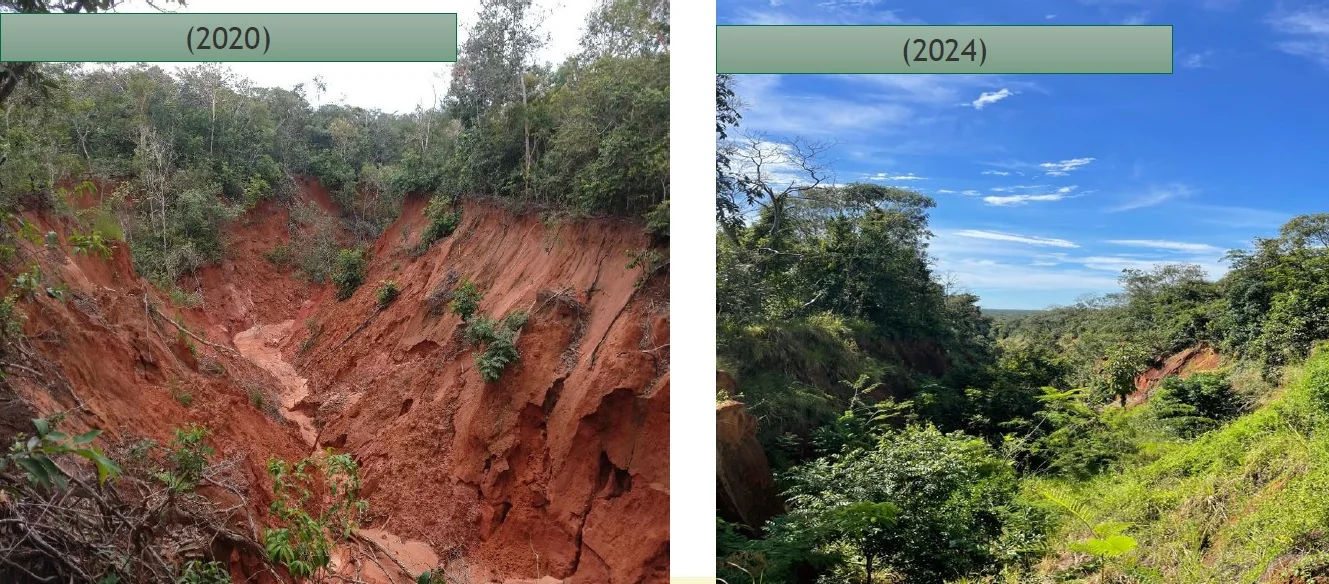
Erosion found on the property, before and after the contract was signed between IPAM and the landowner. The amount paid by CONSERV was invested in recovering the degraded area (Photo: IPAM)
In Sapezal (MT), the farms participating in CONSERV have created a 13 km long corridor of native vegetation, guaranteeing the absence of sources of degradation, including burning, hunting and logging.
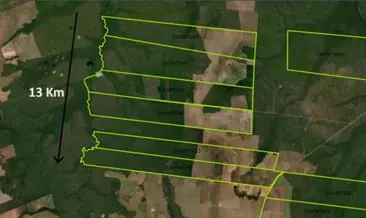
Corridor of native vegetation in areas that took part in CONSERV in Sapezal, State of Mato Grosso (Photo: IPAM)
In Porto dos Gaúchos (MT), a property that took part in CONSERV (in green, center) protects a large remnant of native forest, becoming an “island of conservation” in the midst of an area of intense deforestation and environmental degradation.
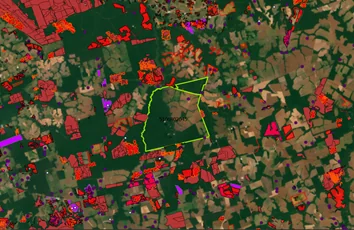
Area already contracted by CONSERV appears as a “conservation island”, in the center. The other polygons represent embargoes, deforestation authorizations, infractions and environmental notices from various official sources (Photo: IPAM)
In addition, CONSERV properties located in critical areas for the connectivity of the regional landscape serve as hubs, facilitating the convergence of various wildlife movement routes.
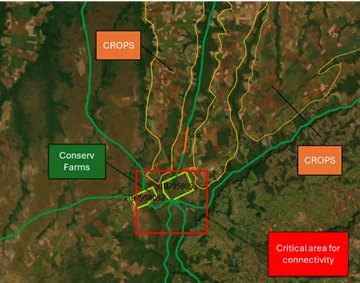
CONSERV areas serve as wildlife movement routes. Photo: IPAM
CONSERV
Launched in 2020, CONSERV puts into practice an efficient and profitable business model for producers, while identifying the effort that these actors play in conservation.
Developed by IPAM in partnership with the Woodwell Climate Research Center and EDF (Environmental Defense Fund), the first phase of CONSERV was supported by the Embassy of the Netherlands and Norway.
The mechanism has started a new phase of contracting in Mato Grosso and Maranhão. This second stage is part of a landscape initiative called “Producers in Focus”. In addition to remuneration, it provides for ATER (Rural Technical Assistance) to support good practices in land use and improvements to increase productivity, as well as governance actions that include compliance and certification of production.
In 2025, more than 7,000 hectares of surplus native vegetation and the ecosystem services it provides were protected – around 4,000 hectares in western Mato Grosso and 3,000 in Maranhão.
Considered an innovative collective action for agribusiness at a landscape level, the new phase is a partnership between IPAM and the PCI Institute (Produce, Conserve and Include), of the Mato Grosso Government, with support from the SCF (Soft Commodities Forum)/Abiove.
*IPAM Communications Coordinator