
Amazonia on Fire: air quality in 2024 and 2025
Filipe V. de Arruda, Ane A. C. Alencar, Newton C. Monteiro, Vera L. S. Arruda, Ana Carolina M. Pessoa, João P. F. M. Ribeiro, Marcia Macedo, Luiz Felipe M. Martenexen, Renata da Costa, Antônio Willian F. de Melo, Ray P. Alves, Wallace V. Silva, Vanessa S. Ribeiro...
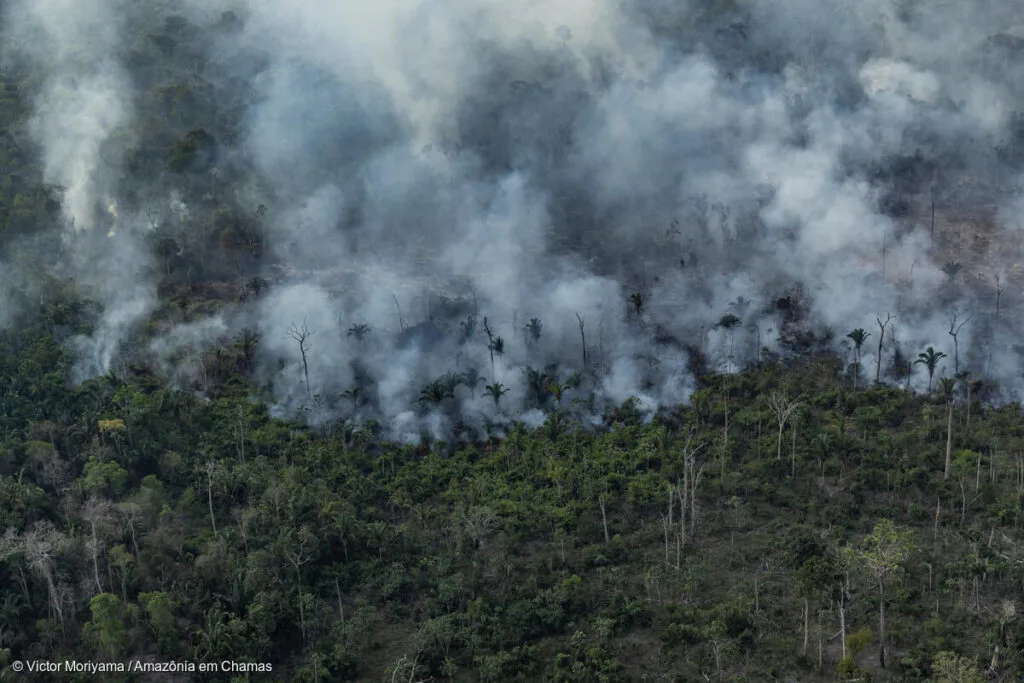

Fire, fragmentation, and windstorms: A recipe for tropical forest degradation
Widespread degradation of tropical forests is caused by a variety of disturbances that interact in ways that are not well understood. To explore potential synergies between edge effects, fire and windstorm damage as causes of Amazonian forest degradation, we quantified vegetation responses to a 30‐min, high‐intensity windstorm that in 2012, swept through a large‐scale fire experiment that borders an agricultural field. Our pre‐ and postwindstorm measurements include tree mortality rates and modes of death, above‐ground biomass, and airborne LiDAR‐based estimates of tree heights and canopy disturbance (i.e., number and size of gaps). The experimental area in the southeastern Amazonia includes three 50‐ha plots established in 2004 that were unburned (Control), burned annually (B1yr), or burned at 3‐year intervals (B3yr).
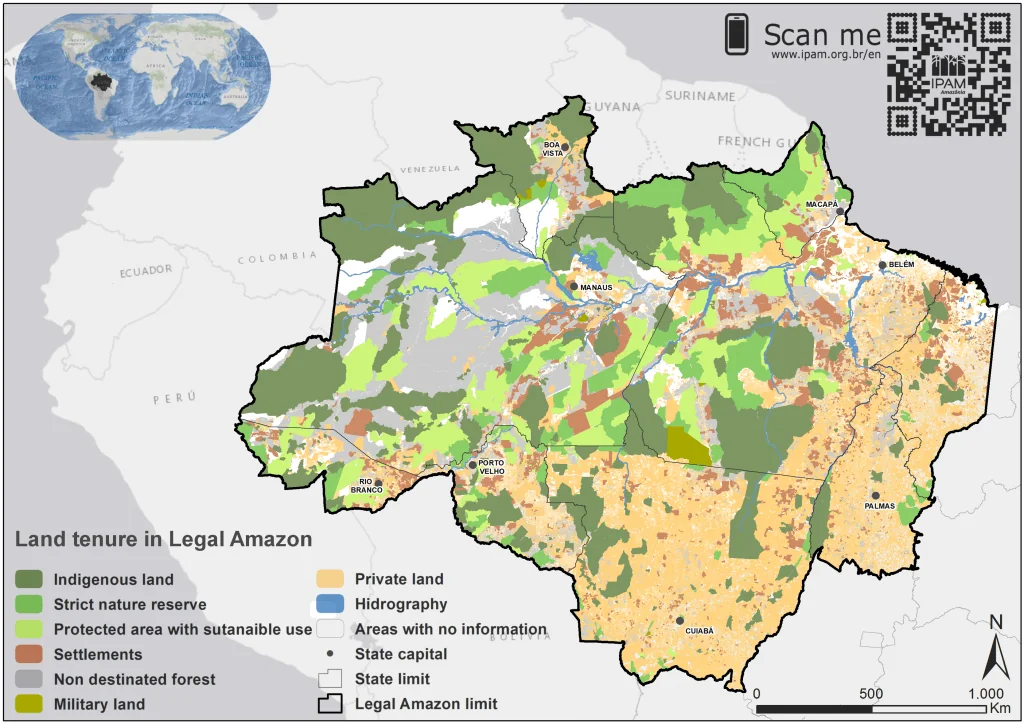
Who owns the Amazon?
This map shows the Amazon according the land tenure: private and public areas (protected areas, indigenous lands, undesignated areas, and rural settlements).
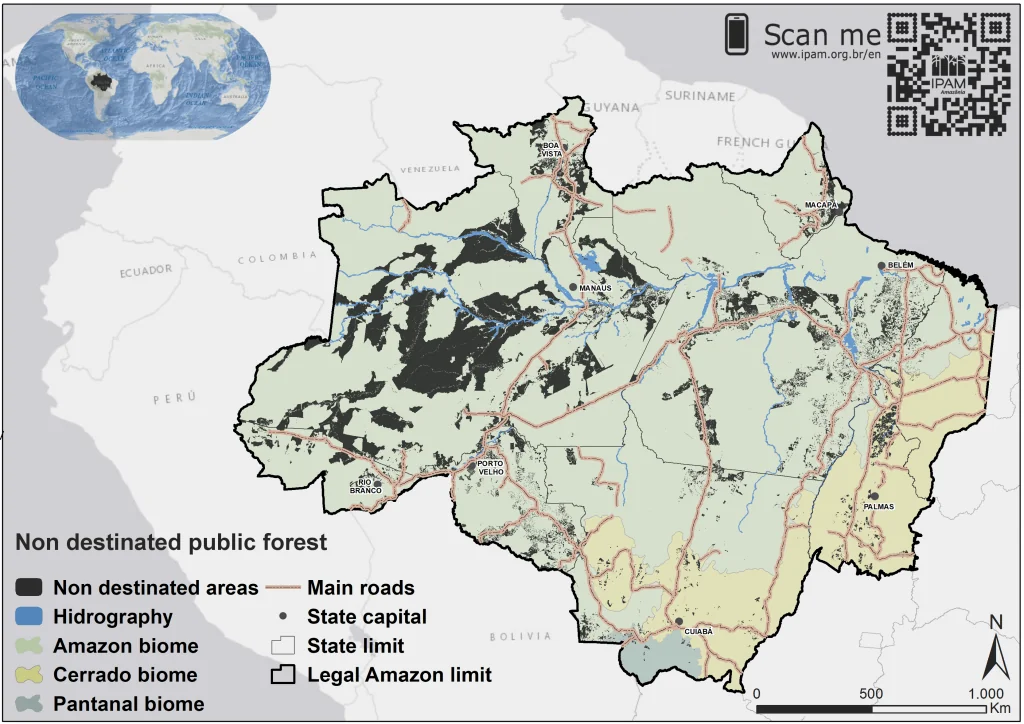
Undesignated areas in the Legal Amazon
There are 65 million hectares of undesignated areas in the Legal Amazon. Their current status increases their vulnerability to land grabbing and illegal timber extraction. It is urgent to destinate those lands to protection.
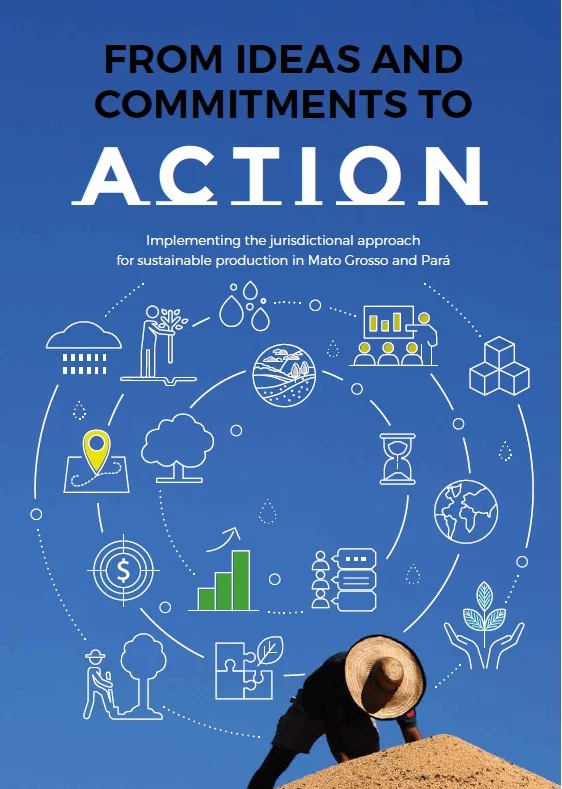
Document – From ideas and commitments to action
Implementing the jurisdictional approach for sustainable production in Mato Grosso and Pará. Developed by Environment Defense Fund (EDF), Instituto Centro de Vida (ICV), Instituto de Pesquisa Ambiental da Amazônia (IPAM), Instituto Socioambiental (ISA) and Imazon. Supported by Norad – Norwegian Agency for Development Cooperation.
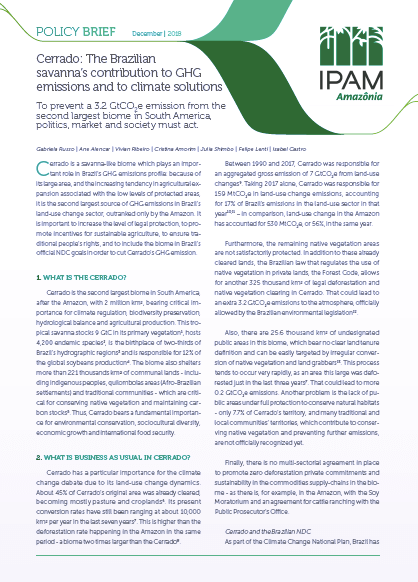
Cerrado: The Brazilian savanna’s contribution to GHG emissions and to climate solutions
Cerrado is a savanna-like biome which plays an important role in Brazil’s GHG emissions profile: because of its large area, and the increasing tendency in agricultural expansion associated with the low levels of protected areas, it is the second largest source of...
COP24 Media Advisory Side Event: Brazil, a second Paris drop-off?
Specialists from academia and the third sector and the current Brazilian government will talk about Brazil’s key role in the global effort to mitigate carbon emissions and in brokering international climate talks. They will present the latest emissions and...